Air-to-water heat pumps: how they work, and do they suit your house?
An air-to-water heat pump heats radiators and hot water with heat from the outdoor air. It needs waterborne heating and loses output in hard frost. Here is what applies.
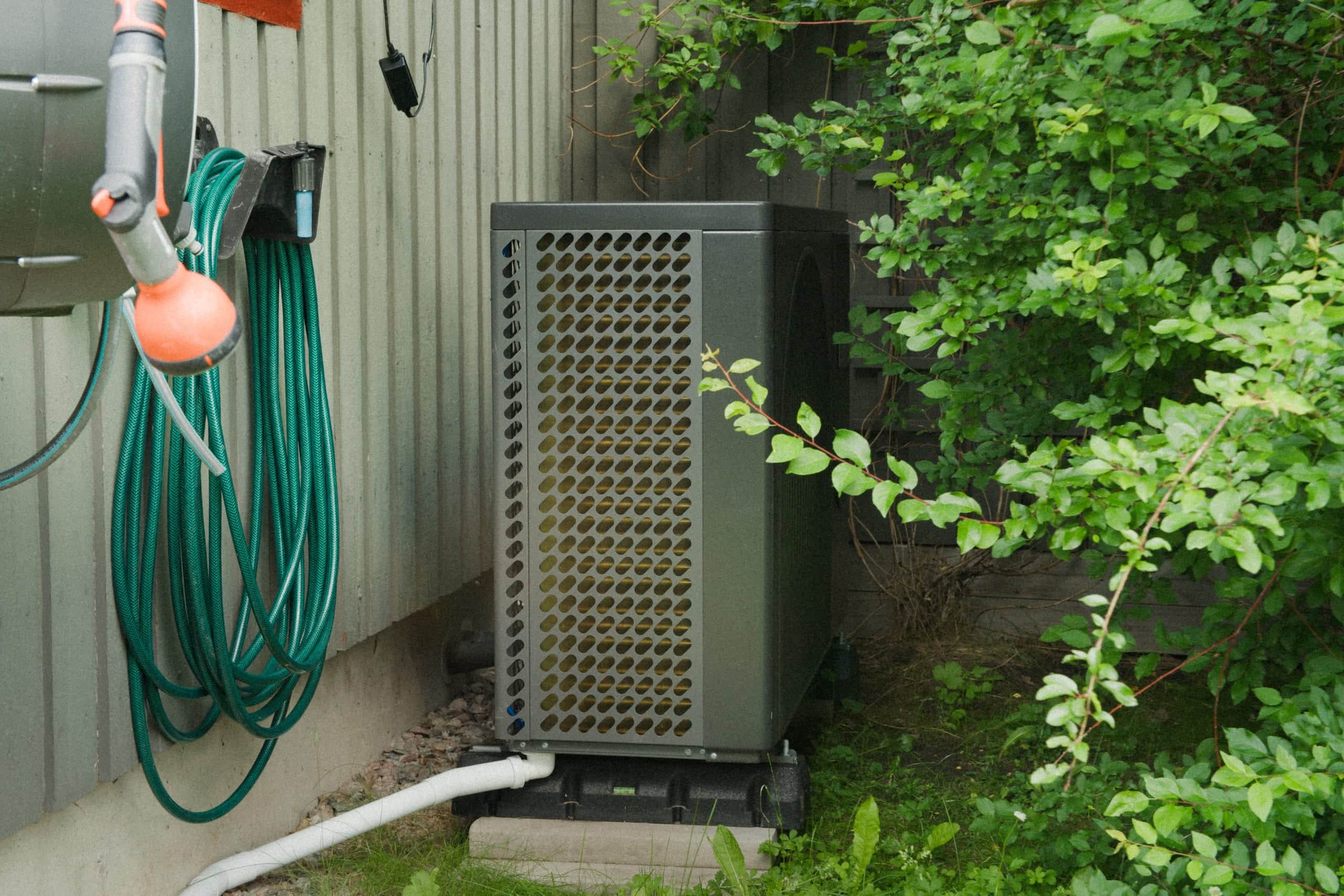
An air-to-water heat pump takes heat from the outdoor air and sends it into the house's waterborne system, meaning the radiators or underfloor heating, and heats the hot water at the same time. It usually costs SEK 130,000 to 190,000 installed after the ROT deduction, needs no drilling and is the first choice for most houses in southern Sweden with waterborne heating.
The names are easy to mix up. Air heat pump, air-to-air, air-to-water, water heat pump. They sound alike but do completely different things, and that difference decides whether the pump suits your house.
Below we go through how an air-to-water heat pump works, what it needs, how it copes with cold and what it costs.
What is the difference between air-to-water and air-to-air?
Both take heat from the outdoor air. The difference is where the heat goes.
An air-to-air heat pump blows warm air into the room through an indoor unit. It never touches the house's water system and does not heat the hot water. It is cheap to install and suits houses without waterborne heating.
An air-to-water heat pump instead heats the water that runs through the radiators or underfloor heating, and the tap water. It replaces the house's heat source completely, in the same way as a boiler or a ground-source heat pump.
Elvy installs air-to-water and ground-source, not air-to-air. If you are looking for an air-to-air pump, we are not who you are looking for.
How does an air-to-water heat pump work?
The outdoor unit draws in outdoor air and takes up the heat in it, even when it is cold. The heat pump raises the temperature and passes it to the water in the house's heating system. The indoor unit distributes the heat to the radiators and heats the hot water. You get about three times more heat out than the electricity you put in.
Do I need waterborne heating?
Yes. An air-to-water heat pump needs a waterborne system to deliver to, meaning radiators or underfloor heating fed by water. If you have that today, for example from an oil boiler, district heating or an older heat pump, the swap is usually straightforward.
If the house has no waterborne heating it can be converted, but then the system adds a cost on top of the pump. More on that in Do I need waterborne heating for a heat pump?
Does air-to-water work when it is really cold?
Yes, but it has to work harder. A modern air-to-water heat pump keeps heating in hard frost, but its efficiency drops the colder it gets. On the coldest days the pump gets help from supplementary electric heat, exactly when the heating need is greatest. That is true of every air-to-water pump, and anyone who says otherwise is selling something.
In cold, humid weather the outdoor unit also needs defrosting at regular intervals. Meanwhile it delivers a little less heat.
That is why sizing matters a lot. The pump should handle the house's design temperature, meaning the lowest outdoor temperature the house must cope with using as little supplementary heat as possible. It differs a lot between Malmö and Gällivare.
Does air-to-water suit southern or northern Sweden?
Southern and central Sweden. For most houses with waterborne heating, air-to-water is the first choice. The winters are mild enough for the pump to run efficiently most of the year, and the installation needs no groundwork. More in Heat pump in southern Sweden.
Northern Sweden. It works, but the sums change. When the cold lasts for months, ground-source heat is usually the stronger choice, especially if there is already a borehole. Read more in Heat pumps in northern Sweden and A ground-source heat pump for your house.
What does an air-to-water heat pump cost?
If you buy yourself, an air-to-water heat pump usually costs SEK 130,000 to 190,000, installed and after the ROT deduction. If you end up at the top of the range, it is usually because of the size of the house, how much pipework is needed and where the outdoor unit will stand.
A package price is rarely the whole price. Servicing, repairs after the warranty and the electricity the pump uses over 15 years come on top, and electricity is the biggest item. We go through it in What does a heat pump cost in 2026?
Noise and placement
The outdoor unit can be heard, especially when it works hard on a cold night. Modern pumps are much quieter than older ones, but the placement needs planning from the start: some distance from bedroom windows and the neighbour's patio, with free airflow and room for the meltwater from defrosting to drain away.
Air-to-water with Elvy
Ground-source or air-to-water is not a matter of taste. With us the energy analysis decides which pump gives the most heat per krona in your house. If it is air-to-water, we size it for a Swedish winter and for your house, not for a sales sheet.
The pump is installed together with solar panels and a battery, and everything is controlled by the electricity price. You pay a fixed monthly fee for 15 years, adjusted only by KPI. No upfront payment, and if something breaks it is our cost.
SEK 0
upfront, the pump is part of the monthly fee
15 years
fixed price, only KPI adjusts it once a year
1–3 days
installation on site for an ordinary house
Does air-to-water suit your house? The energy analysis answers, not a sales sheet.
Keep reading More to explore
- Heat pump
What does a heat pump cost in 2026? Prices for ground-source and air-to-water
A new heat pump usually costs SEK 100,000 to 250,000 installed. Pump type, borehole and house decide. Here are the prices, and what the quote leaves out.
- Heat pump
A ground-source heat pump: price, borehole and installation
Ground-source heat stays even when the cold bites. If you already have a borehole, the switch costs a lot less. Here is what it costs and when it pays off.
- Heat pump
Installing a new heat pump: when it is time and how the swap works
Swapping a heat pump usually takes a couple of days. The preparation is what takes time. Here are the signs it is time, and how the installation works.
0+
Homeowners no longer manage their own power and heat. They decided they had better things to do.
Curious to do the same?