the electricity price changes every hour. your bill sits it out.
An electricity bill is four things: the spot price for the power, the supplier's margin, the grid fee to your local network company, and energy tax with VAT on top of all of it. Only the spot price moves with the market, and only two parts are yours to affect: who you buy the power from, and how much you use. The rest is fees and tax that are the same for everyone at your address.

The guides on electricity prices
Thirteen pieces on what you pay for, why the price moves, and what actually lowers the bill. None of them sells anything. Start wherever you like.
- Electricity prices
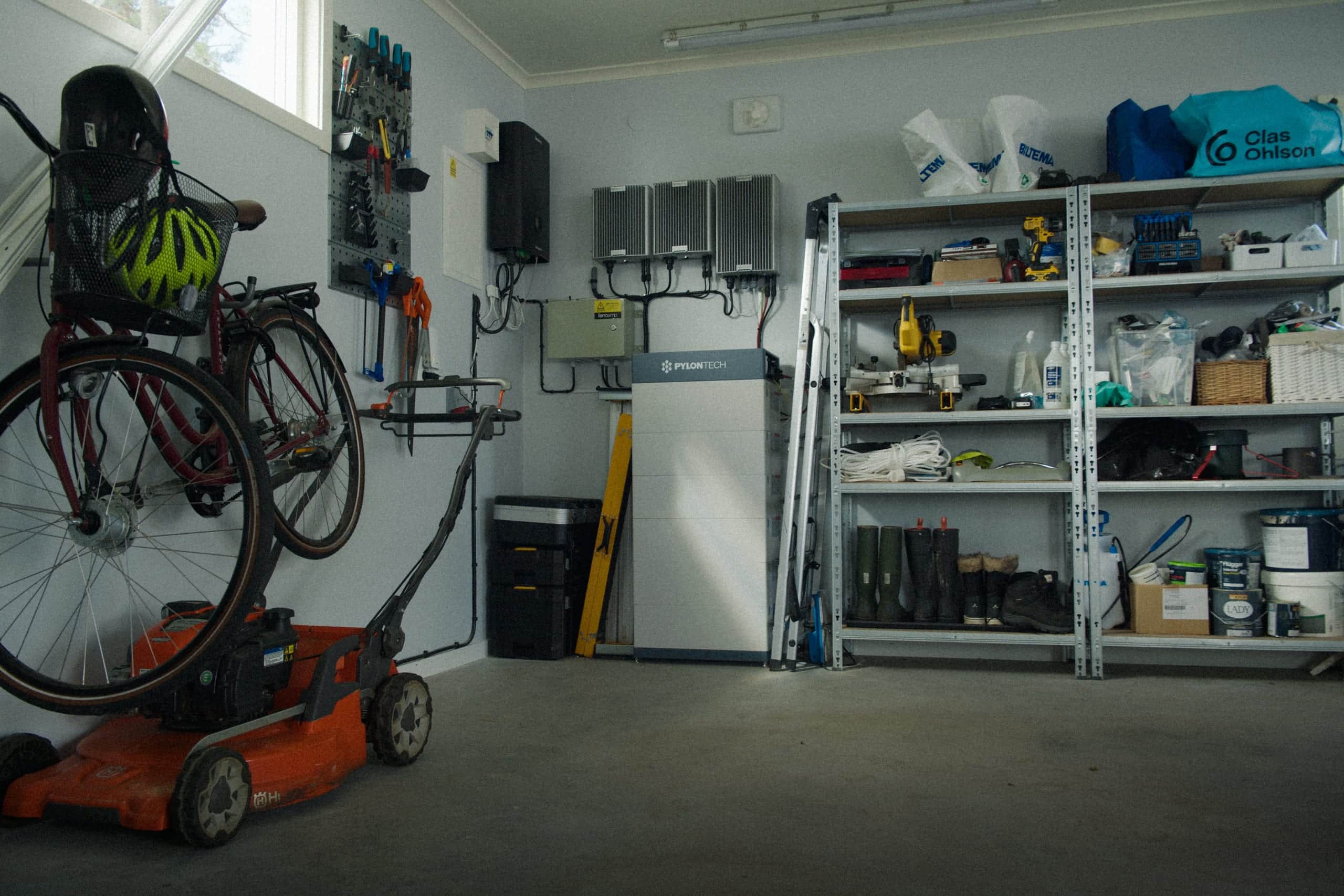
What is a power tariff and how does it affect your bill?
A power tariff is part of your grid fee that charges you for your highest power peak, not just the kilowatt-hours you use. A home battery can shave the peaks.
- Electricity prices
What is a spot price and how is it set?
The spot price is electricity's market price hour by hour, set on the Nord Pool exchange. Every afternoon, tomorrow's 24 prices are set by supply and demand.
- Electricity prices
Electricity areas SE1-SE4: which one am I in, and why?
An electricity area is one of Sweden's four price regions, SE1-SE4. The south usually pays more than the north, because it uses most where it makes least.
- Electricity prices
What is normal electricity use for a villa?
Normal yearly electricity use for a villa usually lands between 10,000 and 25,000 kilowatt-hours. Where you end up is decided mostly by how you heat the house.
- Electricity prices
Comparing electricity providers? Wrong place to save
Most homeowners compare electricity providers to cut costs, but the margins are small. The big saving is in how the house produces and uses its energy.
- Electricity prices
Electricity price shocks: how to protect your home
Electricity prices swing more than ever. This guide explains what drives the swings, and what you as a homeowner can do to withstand the next shock.
- Electricity prices
Best electricity contract 2026? Maybe not one at all
The best electricity contract of 2026 might not be a contract at all. Here's the choice if you live in a house, and why more people question the question.
- Electricity prices
Fixed or variable electricity price? Pick your risk
A fixed or variable electricity price is fundamentally a choice of risk, not of price. How each contract behaves, and who each one suits.

- Electricity prices
Tired of comparing power companies? Bill still swings
You've switched power companies and read the fine print. The bill stays unpredictable. A contract only sets the markup; spot price and grid fee still move.

- Electricity prices
Lower home electricity costs: 8 steps that actually work
In an electrically heated house, 60-70% goes to heating and hot water. That's where the money is, not the light switch. Eight steps, ranked by impact.
- Electricity prices
How the electricity price moves in winter
The electricity price is almost always higher in winter than in summer. The cold drives up consumption, and the price swings most when it's cold.
- Electricity prices
Your electricity bill isn't just the electricity
The bill is made up of spot price, markup, grid fee, energy tax and VAT. Only a small part moves with the market, the rest is fixed charges and tax.

- Electricity prices
Electricity is cheapest when no one else wants it
Electricity is cheapest when demand is low: at night, at the weekend, when it's windy and in the middle of the day. Cold winter evenings are dearest.
What a fixed monthly price changes, and what it does not
Elvy does not remove the grid fee or the tax, they are there for everyone. The difference is that we own the system and handle the electricity trading, and that you pay the same amount in January as in July. The price comes from an energy analysis of your house and is adjusted once a year against the consumer price index. It does not follow the spot price.
The price is set individually; a general price list would just be a guess. Your monthly cost is based on our energy analysis of your specific house.
Because there is no list price. The price is set for your house, from its size, location, current heating, the roof and your consumption, and a figure in an ad would be wrong for most people. You see your figure in the proposal before you decide, and it costs nothing to get.
It can be. When several houses in the same area are installed at once we plan one job instead of many separate ones, and that saving can go back into the price. Every house still gets its own energy analysis and its own price, and there is no minimum number.
The biggest benefit is that you avoid a large, expensive investment. Putting together an energy package yourself is costly and messy, with quotes to compare from several suppliers. You also avoid swinging electricity bills, and we handle service and maintenance. You get a fixed, favourable monthly price, with fossil-free heat and your own solar power.
The products are financed through operational leasing. We pay the leasing cost, and it's included in your monthly price. You don't tie up capital or take out a loan.
No, you don't take out a loan, so there's no interest. We pay for the equipment, and that cost sits in your fixed monthly price. What you see in the proposal is the whole cost, with no lump sum waiting later.
No, your price doesn't rely on any state support. The green deduction (grönt avdrag) is for people who buy and own the equipment themselves, and in the subscription Elvy owns it. So the price in your proposal is the price, grants or no grants.
If the household-electricity allowance runs out, you pay cost price for whatever goes over. In other words, we pass the electricity on with no markup.
No. The grid fee isn't included, and you'll keep getting an invoice from your grid operator. The variable part drops considerably, though, since we install a heat pump, solar panels and a battery. We'd like to include the grid fee later on, but we have no date to promise.
Yes, once a year the monthly price is adjusted by the consumer price index (CPI). In between it stays put and does not follow the spot price or the weather. Only if the electricity price goes above a very high limit in the contract do we invoice the difference for the electricity we have to buy right then, with no fees. That limit has never had to be used.
There's a limit in the contract for exactly that, and it sits very high. If the spot price goes above it, we invoice the difference for the electricity we have to buy right then, at cost and with no fees. That limit has never had to be used. Otherwise your price does not follow the spot price. It's adjusted only by the CPI once a year, and all electricity for heating up to 22 degrees and all hot water is included.

0+
Homeowners no longer manage their own power and heat. They decided they had better things to do.
Curious to do the same?