Do I need waterborne heating for a heat pump?
No, not necessarily. Without waterborne heat an air-to-air pump fits; with it, an air-to-water or ground-source pump. How heat spreads decides which pump.
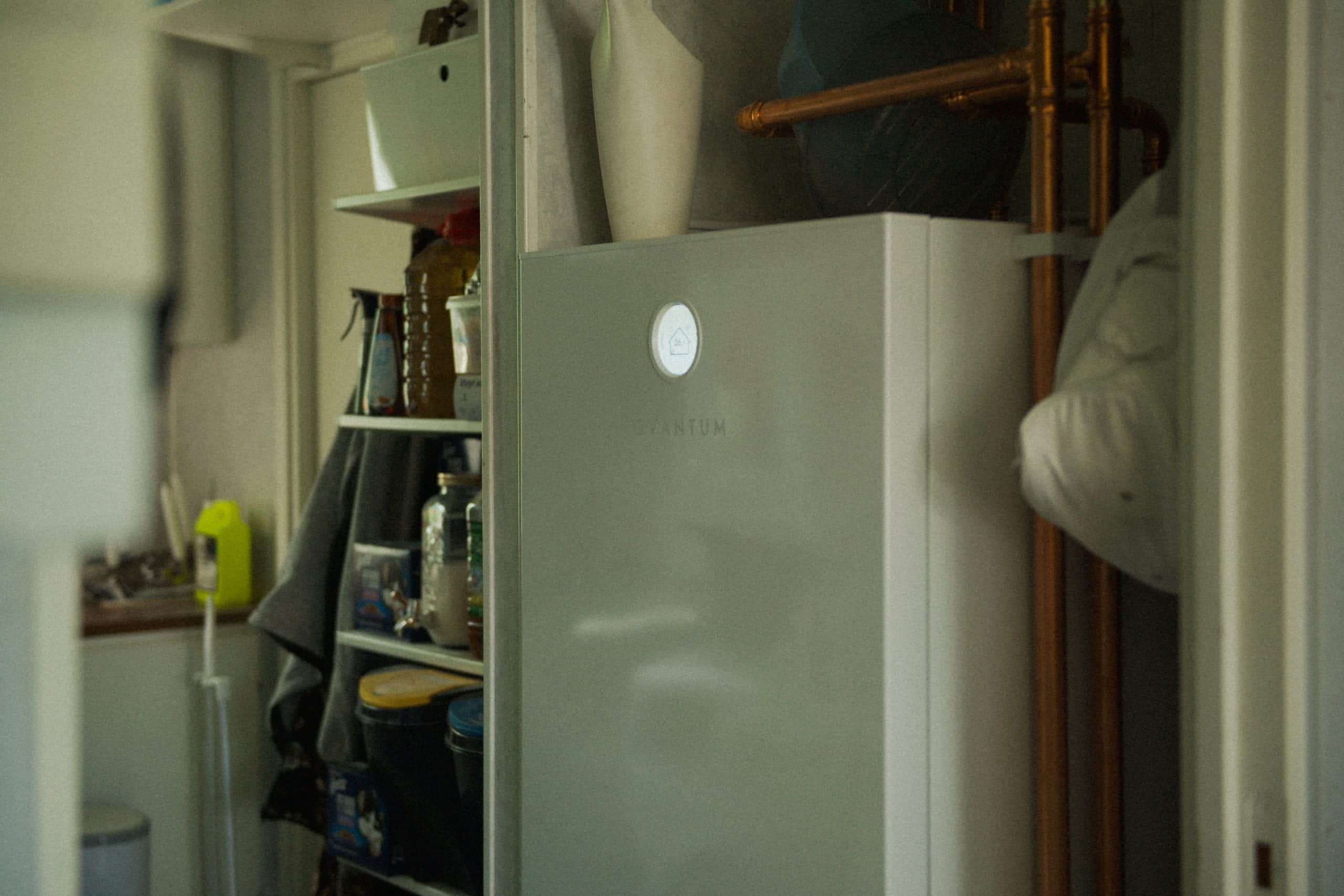
No, not necessarily. A house without waterborne heat, meaning without radiators or underfloor heating fed by water, can use an air-to-air heat pump. A house with waterborne heat can use an air-to-water or a ground-source pump. It's how the heat spreads through the house that decides which pump fits, not whether you can have one at all.
The question people are really asking is whether their house is the wrong sort of house for a heat pump. It almost never is. The distribution system, how the heat gets around, sets which type of pump fits and what a change costs. Below we cover what waterborne heat is, what suits houses with it and without, and how you know which applies to yours.
What is waterborne heat?
Heat carried around the house by water. Radiators fed by pipes, or loops in the floor. The opposite is heat that doesn't run through water: electric radiators that make their own heat straight from the electricity, or air that's blown warm. If you have a water system, there's something for a heat pump to plug into. If you don't, the heat has to get around some other way.
So it isn't a question of whether the house is new or old, but of how the heat is distributed. A house can be newly built and have no waterborne heat, and an old one can have had it for years. It's the distribution that decides, not the age.
What suits a house without waterborne heat?
An air-to-air heat pump. It never touches a water system, it takes heat from the outdoor air and blows it into the rooms through indoor units. A house on direct electric radiators can have one without a single pipe being laid. It heats the air, not the tap water, so the hot water is handled separately, with a water heater for instance.
That makes air-to-air the simplest step for a house without a waterborne system. If you want a pump that also handles the hot water and reaches every room through radiators, the house first needs a water system, and then we're back at the next question.
What suits a house with waterborne heat?
An air-to-water or a ground-source pump. Both feed the water system you already have, the radiators or the underfloor loops, and both heat the tap water into the bargain. Air-to-water takes its heat from the outdoor air, ground-source from a borehole in the ground. If the pipes are already in the walls, the pump has somewhere to send its heat.
If you already have an older air-to-water or ground-source pump, a swap is usually straightforward, since the distribution is already in place. If the house has no waterborne system, converting is possible, but then there's a cost for the system itself on top of the pump.
So what decides which pump fits?
The distribution system, how the heat gets around the house, not whether you're allowed a heat pump. If you have waterborne heat, the choice is between air-to-water and ground-source. If you don't, air-to-air is the simple answer, or the cost of converting to waterborne if you want the other two.
So the question was never whether the house can have a heat pump, but which. Nearly every house can be heated with some kind of pump. What sets them apart is what's already in the walls and what it costs to change.
How do I know what suits my house?
An energy analysis reads how the house is heated today and picks the pump that fits it. You don't need to know whether you have waterborne heat or which type of pump matches. That's exactly the judgement the analysis makes for you.
With Elvy the pump is then ours. It's chosen and sized from the analysis, put together with solar panels and a battery as one whole, and you pay a fixed monthly cost. Which pump your house needs becomes our job to work out, not yours to guess.
Keep reading More to explore
- Heat pump
What does a heat pump really cost? The 15-year total
The purchase price is the smallest part. Over 15 years the cost is installation, service, repairs and above all electricity. It's the biggest, worst at the end.
- Heat pump
What are COP and SCOP? How to read a heat pump's spec
COP and SCOP measure a heat pump's efficiency. COP is heat per unit of power now, COP 3 gives three parts heat per part power. SCOP is the season average.
- Heat pump
What does a new heat pump cost per month?
A new heat pump rarely costs what you think. Often more than you budgeted for. Here we break down the real monthly cost, whatever way you finance the switch.

0+
Homeowners no longer manage their own power and heat. They decided they had better things to do.
Curious to do the same?