Can I switch from district heating to a heat pump?
Yes. A district-heated house nearly always has water-based heating, so the radiators stay and only the heat source changes. You cancel the supply yourself.
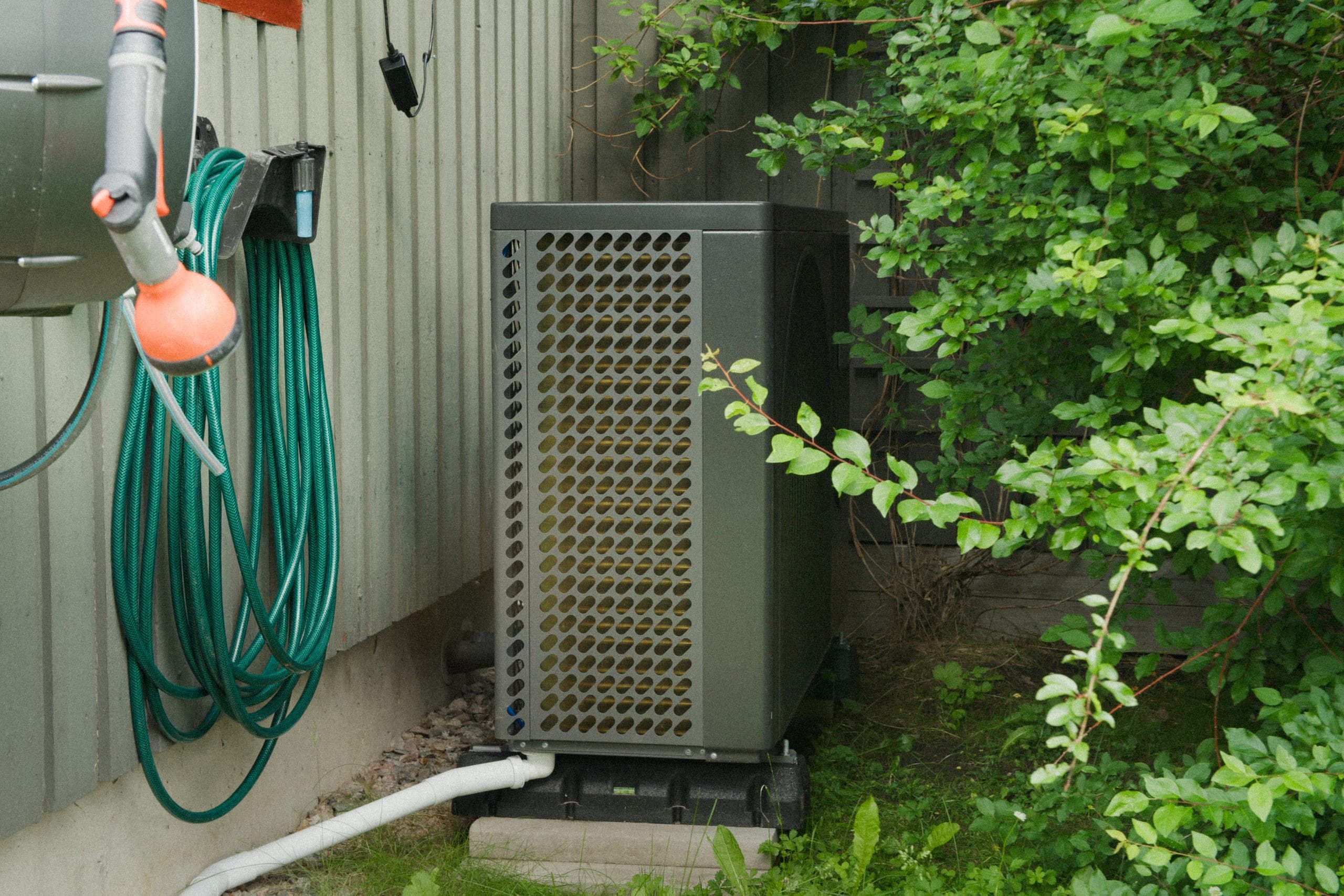
Yes. A house on district heating nearly always has water-based heating, meaning radiators or underfloor loops fed by water. So the distribution is already in place. What changes is the heat source: the district-heating unit is disconnected and a heat pump feeds the same pipes.
That makes the switch less dramatic than it sounds. You get to keep the pipes in the walls. Below we go through what you don't have to do, what happens to the unit, which pump suits the house and what you have to arrange yourself.
What don't you have to do if the house has district heating?
The conversion. A heat pump needs somewhere to send its heat, and a district-heated house already has it: radiators or underfloor loops fed by water. A house without that has to build the system first, before the pump is even in place. That part is done at yours.
So the difference from a house replacing an old ground-source pump isn't the distribution. It's where the heat comes from today: a network outside the house, rather than something standing inside it.
What happens to the district-heating unit?
It's disconnected and taken out of service, and the heat pump takes over the same pipes.
Cancelling the supply and removing the unit is your job, not ours. Read the contract with your district-heating supplier first. It sets out what applies when you cancel, and whether leaving the network costs anything.
Which heat pump suits a district-heated house?
An air-to-water or a ground-source pump. Both feed a water-based system, and which of the two suits you is decided by the plot and where in the country the house stands, not by the fact that you had district heating.
An air-to-air heat pump is rarely the answer here. It blows warm air into the rooms and never touches the water system, so the radiators you already have would sit cold.
What if district heating in my area is being shut off?
Then the question isn't whether to change heat source, but which one you change to. If you've been told the network is closing, the first thing to establish is when heat actually stops being delivered, because that deadline is what everything else has to fit around.
The radiators and pipes stay whatever happens to the network. It's the heat source that has to be replaced, not the heating system.
What does the analysis need to know about a district-heated house?
How much the house uses, and what the plot allows. That you've had district heating already says one thing: the heat is water-based, so the pump has somewhere to send it. The energy analysis reads the rest on site.
With Elvy the pump is then ours. It's sized from the analysis, put together with solar panels and a battery as one system, and you pay a fixed monthly cost with nothing upfront. Cancelling the district heating is still yours. What goes in instead is our job.
Keep reading More to explore
- Heat pump
What does a heat pump really cost? The 15-year total
The purchase price is the smallest part. Over 15 years the cost is installation, service, repairs and above all electricity. It's the biggest, worst at the end.
- Heat pump
What are COP and SCOP? How to read a heat pump's spec
COP and SCOP measure a heat pump's efficiency. COP is heat per unit of power now, COP 3 gives three parts heat per part power. SCOP is the season average.
- Heat pump
What does a new heat pump cost per month?
A new heat pump rarely costs what you think. Often more than you budgeted for. Here we break down the real monthly cost, whatever way you finance the switch.
0+
Homeowners no longer manage their own power and heat. They decided they had better things to do.
Curious to do the same?