Solar and battery: do you really need both?
Do you really need a battery with your solar panels? In 2026 the answer is almost always yes. It raises self-consumption and shaves expensive power peaks.
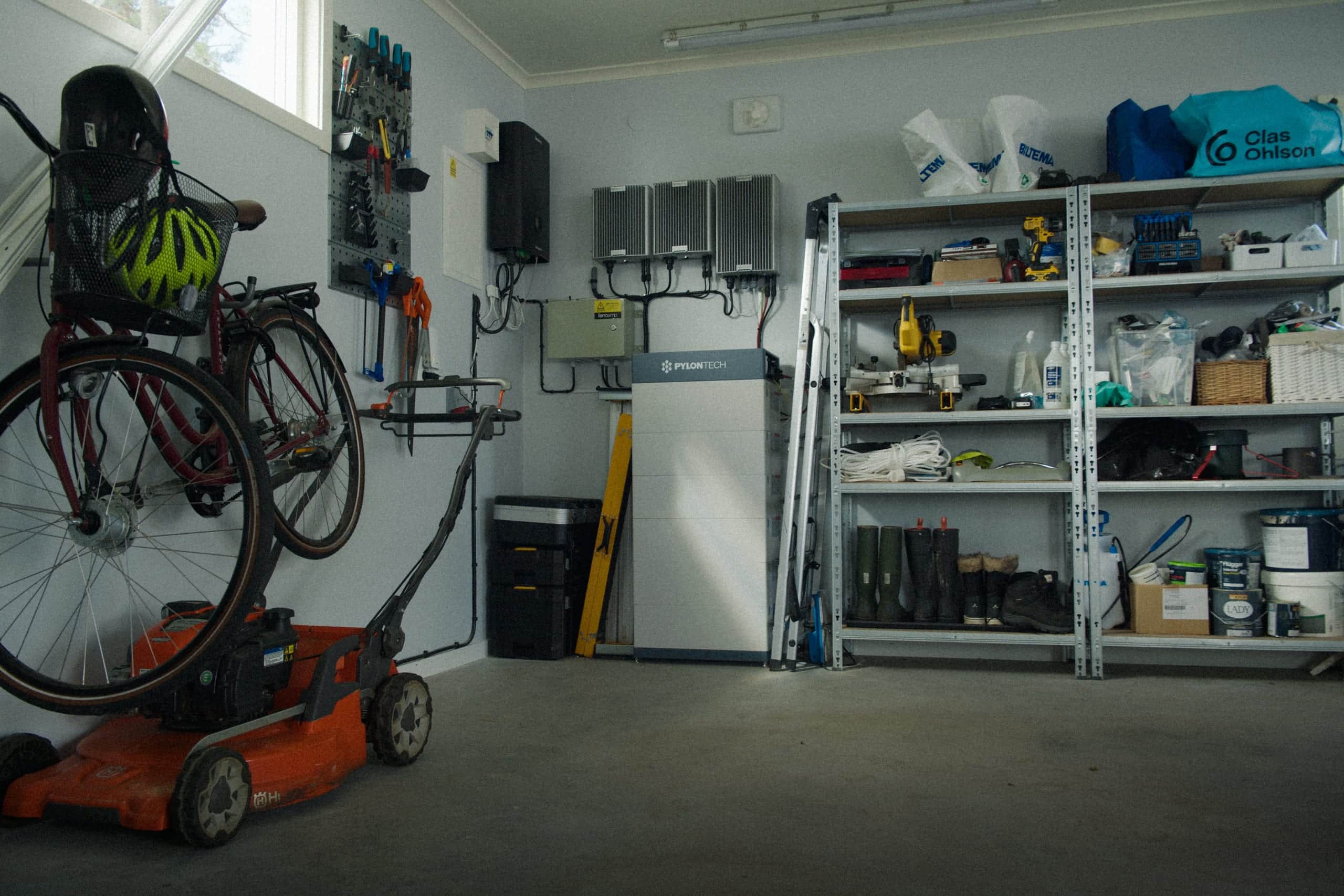
Solar panels produce. A battery decides when you actually use what they make. Here's why you want both.
Why aren't solar panels enough on their own?
Solar panels produce the most electricity in the middle of the day, when the sun is at its highest. That is also when most families are at work or school, and consumption at home is at its lowest. Without a battery, the surplus electricity is sent out onto the grid, often at a lower value than it saves you when you use it yourself.
That is because the electricity you buy from the grid includes taxes and fees that you avoid when you use your own self-produced electricity. Selling it and then buying it back is almost always a worse option.
Three reasons to choose solar panels with a battery
A battery fundamentally changes how the system works. Instead of producing and hoping you happen to be home, you store the energy and use it when it is really needed.
Increase your self-consumption
With battery storage, you save the day's sunshine for dinner time, the washing machine, or to run the heat pump overnight. Instead of selling cheap and buying expensive, you use more of your self-produced electricity at home.
Cut power peaks and lower your grid fee
More grid operators are introducing capacity tariffs, which means you pay more if you use a lot of electricity over short periods. A smart battery can step in and support the house when the load is high, for example if you start the oven at the same time as the electric car is charging. By reducing the peaks in your consumption, you can avoid unnecessarily high grid fees.
Support services that keep the grid stable
This is the biggest development for 2026. A battery can be part of a network that helps keep the Swedish electricity grid stable. Svenska kraftnät pays for the battery to be available for frequency regulation. In an energy subscription it is Elvy that owns the battery and takes that revenue. It goes towards keeping your monthly cost down rather than being paid out to you, and the levels vary over time.
High consumption in the evenings and at night
If the household uses the most electricity when the sun is not shining, a battery has the most to offer.
Electric car in the garage
Electric-car charging creates power peaks. A battery evens out the load and reduces the grid fee.
Heat pump in the system
A heat pump powered by stored solar electricity lowers the running cost even further, especially during cold nights.
Grid operator with a capacity tariff
Do you already pay a capacity tariff, or are you at risk of starting to? The battery protects you against the most expensive hours.
Access to the support-services market
Through Elvy's network, the battery contributes to frequency regulation. Elvy owns the battery and takes that revenue, which keeps your monthly cost down.
Is a battery right for every household?
No, a battery is not the right choice for every household. It generally delivers less benefit if you have low total electricity consumption, if you lack significant consumption in the evenings and at night, or if you do not have access to the support-services market. In those cases the payback time can be longer.
That is why it is important to look at the house as a whole before making a decision. It is not the individual product that determines the result, but how the entire energy system works together.
How Elvy makes the combination simple
A common objection to solar panels and batteries is the technical complexity and the high investment cost. Elvy does not offer individual components but a complete energy setup where solar panels, battery, and heat pump work together in an integrated system.
With Elvy, you do not need to be an expert or buy the hardware yourself. We install the whole system as one coherent unit, and the system automatically optimises between self-use, storage, and buying from the grid, based on the electricity price, the weather forecast, and how your particular house actually uses energy.
Combining solar panels and a battery is not only about the environment. It is about financial predictability. When production, storage, and heating work together, you become less sensitive to the swings of the electricity market, and your largest housing cost becomes more predictable. No single component does that job on its own.
Keep reading More to explore
- Battery
What does a home battery cost, and is it worth it?
What a home battery costs depends on the house. The honest figure doesn't exist until someone runs your numbers. Bought outright, payback is uncertain.
- Battery
How big a home battery do I need?
The right size for a home battery is measured in kilowatt-hours and depends on what you want it to do. Bigger isn't always better; it comes from an analysis.
- Battery
How does a home battery shave the power fee?
A power fee charges for your highest power peak. A home battery shaves that peak by covering part of the load in the moment, so less is drawn from the grid.

0+
Homeowners no longer manage their own power and heat. They decided they had better things to do.
Curious to do the same?