How does a home battery shave the power fee?
A power fee charges for your highest power peak. A home battery shaves that peak by covering part of the load in the moment, so less is drawn from the grid.
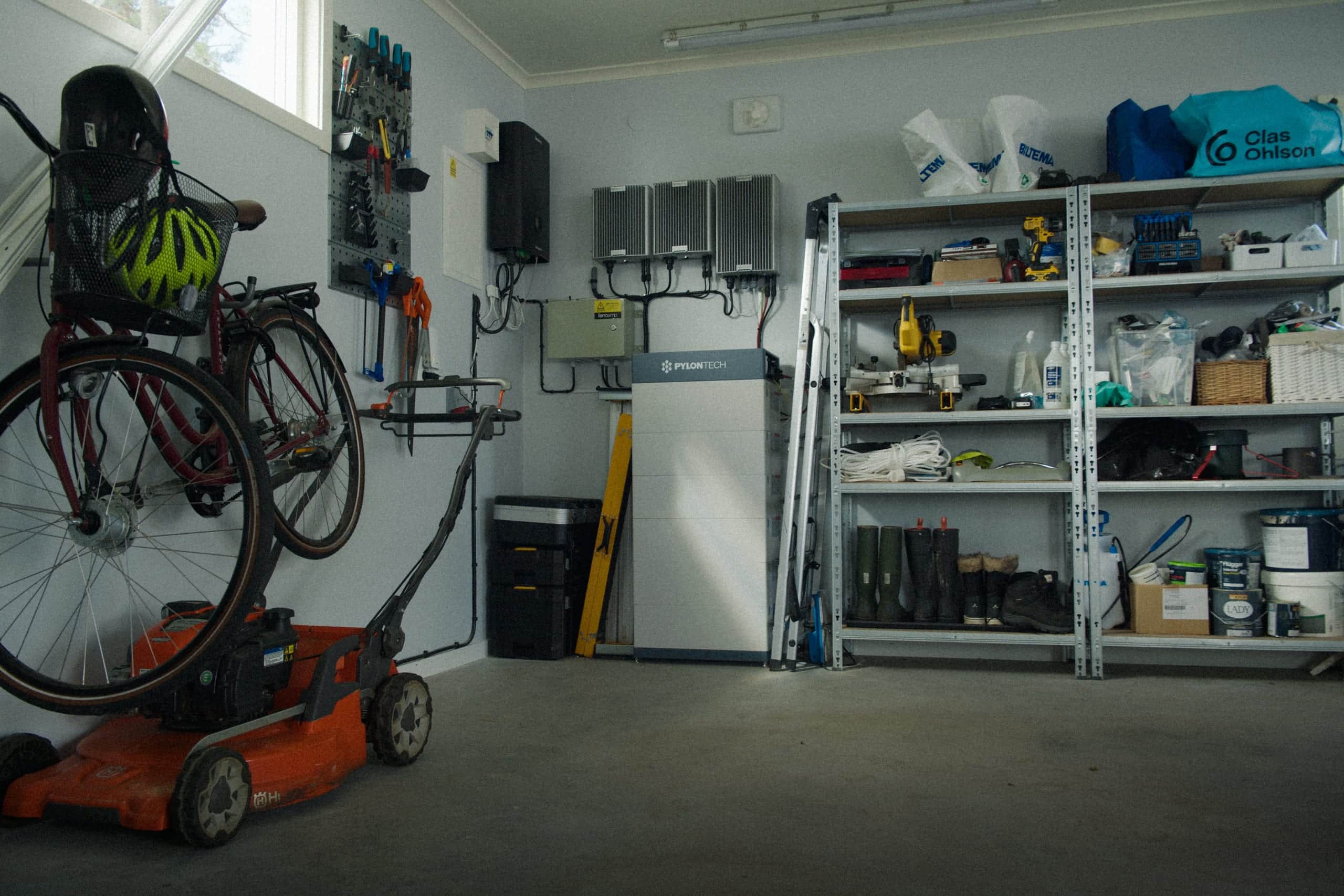
A power fee charges for your highest power peak, the moment when the most things in the house draw electricity at once. A home battery shaves that peak: when everything comes on together, the battery covers part of the load instead of it all being pulled from the grid at once. The measured peak drops, and the fee with it.
And the battery does it without you changing a single habit. Below we cover how the battery shaves the peak, why power matters and not just size, and when the shaving actually pays off. What a power fee is and how the peak is measured we cover in the guide on the power tariff.
What is a power peak?
A power peak is the highest power you draw during the measuring window, measured in kilowatts, not how much electricity you've used in total. That's the moment the power fee charges for, and the one we want to shave. What a power fee is, why it's introduced and how the grid company measures the peak we cover in the guide on the power tariff. Here we stay on what the battery does about it.
How does the battery shave the peak?
By stepping in and covering part of the load right when it's highest. When several things start at once, the house normally pulls it all from the grid together, and that's when the meter maxes out. A battery can instead give off electricity in the same moment, so part of the load comes from there and less from the grid. The measured peak drops.
The point is that the battery doesn't reduce how much electricity you use, only where it comes from at the instant that counts. The oven gets its power, the EV gets its, but some of it passes through the battery instead of through the meter. The grid company sees a flatter curve than the one you actually run.
Why does power matter and not just size?
To shave a peak, the battery has to be able to give off a lot at once, not just hold a lot. The size, measured in kilowatt-hours, tells you how long the battery lasts. The power, measured in kilowatts, tells you how hard it can deliver in the moment. A large battery that can only give a little at a time does poorly against a short, high peak.
So a battery meant to shave power peaks is judged on both measures. It has to be strong enough to meet the peak while it lasts, and last until it's over. Which combination fits depends on how high and how long your peaks are, and that only shows once you look at the house.
Do I have to relearn my habits?
No. The alternative is spreading out your usage by hand, charging the EV at night, running the wash when nothing else heavy is on, and never accidentally starting everything at once. It works, but only if you can keep track of it every day, all year round.
A battery takes over that planning. The optimisation knows when the EV is charging and when the heat pump is working hardest, and discharges the battery at the right moment to flatten the curve. You notice nothing, and you don't have to schedule your life around a tariff.
Does it pay off?
It depends on two things: whether your grid company charges a power fee, and how spiky your usage is. If you have no big, simultaneous peaks, there's little to shave. If you have an EV and a heat pump that often draw at the same time in the evening, there's all the more, because those are exactly the peaks the fee charges for.
The shaving is rarely the whole reason to get a battery, but it's one of the returns added to the others: moving electricity to cheap hours, saving solar power for the evening, taking part in support services. How much the peak-shaving alone gives varies with how your tariff is built, and it's not something you can read your way to in an article.
How is this handled with Elvy?
You don't have to think about it. Elvy sizes the battery to your house, so it both holds and is strong enough for what you need, and puts it together with solar panels and a heat pump as one whole. Elvy owns the equipment and runs the optimisation against spot price, power peaks and support services in the background.
The peak-shaving happens automatically and is part of the fixed monthly cost. If the grid company changes its tariff, it's our job to adjust, not yours. What you pay for power is something you never have to do the arithmetic on.
Keep reading More to explore
- Battery
What does a home battery cost, and is it worth it?
What a home battery costs depends on the house. The honest figure doesn't exist until someone runs your numbers. Bought outright, payback is uncertain.
- Battery
How big a home battery do I need?
The right size for a home battery is measured in kilowatt-hours and depends on what you want it to do. Bigger isn't always better; it comes from an analysis.
- Battery
Solar and battery: do you really need both?
Do you really need a battery with your solar panels? In 2026 the answer is almost always yes. It raises self-consumption and shaves expensive power peaks.

0+
Homeowners no longer manage their own power and heat. They decided they had better things to do.
Curious to do the same?