Solceller
Buy solar panels or take out an energy subscription?
Buy solar panels if you have the capital, the technical interest and want to own the system yourself. You take the whole upside, but also the wear and the market risk. If you just want a predictable bill, an energy subscription fits better: Elvy owns and runs the whole system for a fixed amount. The choice is about what you want to manage.
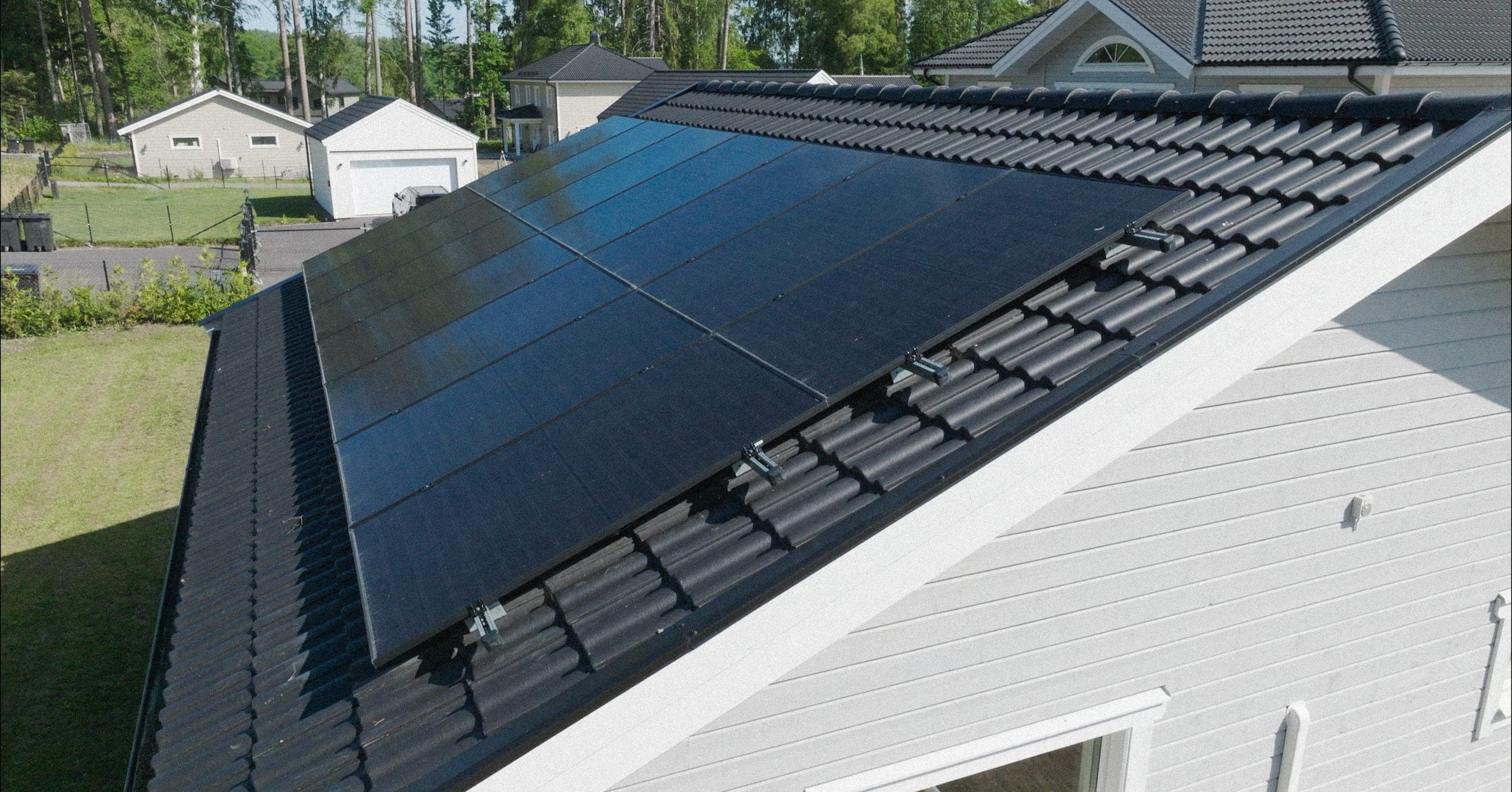
Buying solar panels means you tie up capital, own the panels and take the whole profit, but also that wear and market risk land on you. An energy subscription turns that around. Elvy owns and optimises the whole system for a fixed monthly price. No investment, no risk, but no upside of your own either.
Which one is right depends on whether you want an asset to manage or a bill you can forget. Below we cover what you actually take on when you buy, what the subscription lifts off you, who each one fits, and what comes out cheapest over time.
What does owning your solar panels involve?
You pay for the whole system at once, or borrow for it, and then you own it. The panels become a fixture that follows the house when you sell. You take the whole surplus and the whole rise in value, and you decide over everything yourself. That's the big advantage of buying.
Ownership brings the running of it too. You keep track of warranties, book service when something plays up, and replace the inverter, the system's brain, at some point in the panels' lifetime, because it wears out faster than they do. You sell your surplus to the grid yourself, and you carry the risk if the electricity price or the payment for sold power comes in lower than you hoped.
What's included when Elvy owns the system?
The whole system and everything around it. Elvy installs solar panels, a heat pump and a battery, owns the equipment and optimises it against the electricity price. Choosing the system, coordinating the roof work, chasing warranties, replacing the inverter when it wears out and selling the surplus, all of it sits with Elvy. Your part is a signature.
If something breaks, it's Elvy's job to fix it at no extra cost. You pay a fixed amount a month, the same in January as in July, with no upfront cost and no loan for the hardware. The price stays fixed for 15 years and is adjusted once a year by the consumer price index, never by the spot price. Elvy owns the electricity and trades it, and that upside goes to Elvy. It's part of how a fixed cost adds up.
Who should buy?
Someone with the money, a genuine interest in the technology and a wish to own their roof. If you want to choose the components yourself, follow the production hour by hour and optimise the system on your own, you should probably buy. You take the whole upside too, and that's a reasonable thing to want.
Who does the subscription fit?
Most everyone else. The person who wants a warm house, a predictable bill and to not become an energy expert in their spare time. You care that the electricity works, not who owns the inverter. Then a fixed amount and zero responsibility is worth more than a surplus you weren't going to manage anyway.
What comes out cheapest over time?
Honest answer: buying can be cheaper on paper. If you have the capital, do the homework and look after the system well, you take the whole surplus and pay no one to carry the risk for you. No middleman takes a cut. Over many years that can land lower than a fixed monthly cost.
But that assumes the sums hold. The electricity price, the payment for sold power, an inverter that fails earlier than planned, a year with little sun: all of it lands on you when you own. The subscription swaps that uncertainty for a known amount. You don't necessarily pay less, you pay the same every month and skip the arithmetic. What's worth most depends on how much you enjoy doing the maths.
How do you choose between buying and subscribing?
Ask yourself what you actually want: an asset to manage, or a bill you can forget. Want to own and optimise, buy. Want it to just work, subscribe. There's no right answer, only two different things to want.
Elvy is available today for villas and houses across Sweden, but not yet for flats. The price is set individually from an energy analysis of your house, because a list price would just be a guess. If you want to know what it comes to for your particular roof, the analysis has the answer, not this article.
Keep readingMore to explore
- Solceller
Do solar panels work in winter in Sweden?
Yes, solar panels work in winter, but they make much less electricity. The cold isn't the problem, the panels rather like it. It's the daylight that runs short: short days and a low sun mean a Swedish winter month yields a fraction of a summer month. Solar is judged over the year, not on December.
- Om Elvy
What is an energy subscription, and how does it work?
An energy subscription is a fixed monthly price for your whole home's electricity and heat. Elvy installs, owns and runs the system for you. No upfront cost, the same price for 15 years. Here's how it works, and when it fits.
- Elpriser
What is a power tariff, and how does it affect my electricity bill?
A power tariff is part of your grid fee that charges you for your highest power peak, not just for the number of kilowatt-hours. The more you draw at one time, the higher the fee. A home battery can shave the peaks for you automatically. Here's how the power tariff works, and when it's actually an advantage.
0+
Homeowners no longer manage their own power and heat. They decided they had better things to do.
Curious to do the same?