Solceller
Do solar panels work in winter in Sweden?
Yes, solar panels work in winter, but they make much less electricity. The cold isn't the problem, the panels rather like it. It's the daylight that runs short: short days and a low sun mean a Swedish winter month yields a fraction of a summer month. Solar is judged over the year, not on December.
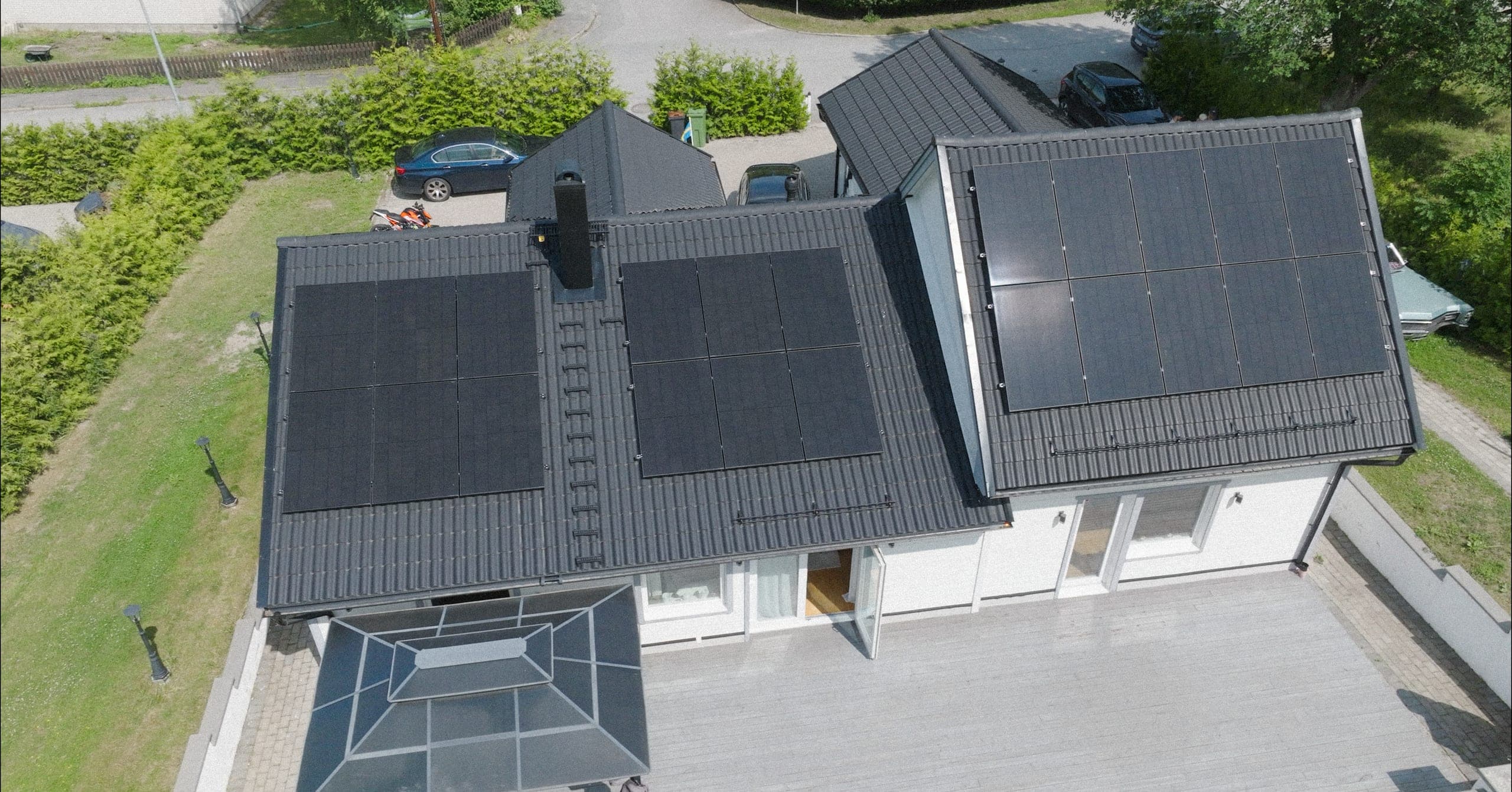
Yes, solar panels work in winter, but they make much less electricity. The cold isn't the problem, the panels rather like it. It's the daylight that runs short: short days and a low sun mean a Swedish winter month yields a fraction of a summer month. Solar is judged over the year, not on December.
That makes solar a technology you judge on an annual basis. The summer surplus makes up for the lean winter, and it's the total across twelve months that decides whether it pays off. Below we cover why the cold doesn't matter, what snow does, why December looks the way it does, and why the solar panels belong with a battery and a heat pump.
Do solar panels work when it's cold?
Yes, better than you'd think. Solar panels make electricity from light, not from heat, and they actually run slightly more efficiently when it's cold. A clear, cold winter day is no problem for the panel itself. What matters is the number of daylight hours, not the temperature.
So the cold isn't the enemy. A sunny day in March can give more electricity than an overcast one in July. It's the sun that's missing in winter, not the warmth.
How much electricity do they give in winter?
Far less than in summer. Two things work against you in December: the days are short, and the sun sits low even when it's up. The light has to travel through more atmosphere and hits the roof at a shallow angle. A Swedish winter month therefore gives only a fraction of what a summer month does.
The further north you go, the clearer it gets. In southern Sweden the winter is lean, in the north it's almost dark. There's nothing wrong with the panels, this is just how it works this far north.
What does snow do to production?
If snow stays on the panel, it makes no electricity. Covered glass lets in no light, so production stands still until the snow slides or melts off. The good news is that panels sit on a tilted roof with a smooth surface, so the snow usually comes off fairly quickly once the sun shows up.
On the days the snow stays put, the panels would have made little electricity anyway, since it's the middle of the dark part of the year. The loss is small in the bigger picture. You don't need to climb up on the roof with a broom.
Why is solar counted over the year, not the month?
Because production is so unevenly spread. Solar panels make a lot when it's bright and little when it's dark, and in Sweden the gap between summer and winter is enormous. Look only at December and they seem feeble. Look at the whole year and the summer surplus outweighs the winter shortfall.
That's why you judge solar on its annual output. The value you build during the bright months is what you live on across all twelve. Writing them off in January is like writing off an apple tree in February.
Will the panels heat the house in December?
No, and they're not meant to. If you expect the solar panels to pay December's heating bill, you'll be disappointed. That's when they make the least electricity, at the same time as the house draws the most. The two curves point in opposite directions right when you'd most want them to meet.
So don't judge the panels on your darkest month. It's the year's total that counts, not December on its own. Anyone who buys solar to get through the winter has bought it for the wrong reason.
Why do the panels belong with a battery and a heat pump?
Because they cover each other's weak spots. The solar panels make electricity, the battery saves it for the evening, and the heat pump turns it into heat. On its own the solar panel is a summer machine. Together with the other two it becomes part of a system that works all year.
That's why Elvy doesn't sell solar panels on their own. The three parts are sized together for your house, and it's the whole that has to add up, not a single panel on a single day.
Do solar panels pay off despite the winter?
It depends on your house, and that's the whole point. The roof, the pitch, the direction it faces and how much electricity you use decide what the panels give over a year. It can't be answered in advance without looking at your particular situation.
That's why Elvy sets no list price. An energy analysis of the house works out what the solar panels, the battery and the heat pump give together, and what that lands at per month. The winter is counted in from the start. What the roof does in December is nothing you ever need to worry about.
Keep readingMore to explore
- Solceller
Buy solar panels or take out an energy subscription?
Buy solar panels if you have the capital, the technical interest and want to own the system yourself. You take the whole upside, but also the wear and the market risk. If you just want a predictable bill, an energy subscription fits better: Elvy owns and runs the whole system for a fixed amount. The choice is about what you want to manage.
- Om Elvy
What is an energy subscription, and how does it work?
An energy subscription is a fixed monthly price for your whole home's electricity and heat. Elvy installs, owns and runs the system for you. No upfront cost, the same price for 15 years. Here's how it works, and when it fits.
- Elpriser
What is a power tariff, and how does it affect my electricity bill?
A power tariff is part of your grid fee that charges you for your highest power peak, not just for the number of kilowatt-hours. The more you draw at one time, the higher the fee. A home battery can shave the peaks for you automatically. Here's how the power tariff works, and when it's actually an advantage.
0+
Homeowners no longer manage their own power and heat. They decided they had better things to do.
Curious to do the same?