Heat pump
Heat pumps in northern Sweden: what you need to consider
In northern Sweden, the winter cold can last for up to five months. That places higher demands on the heating system – and on the numbers. Here's what you need to keep track of.
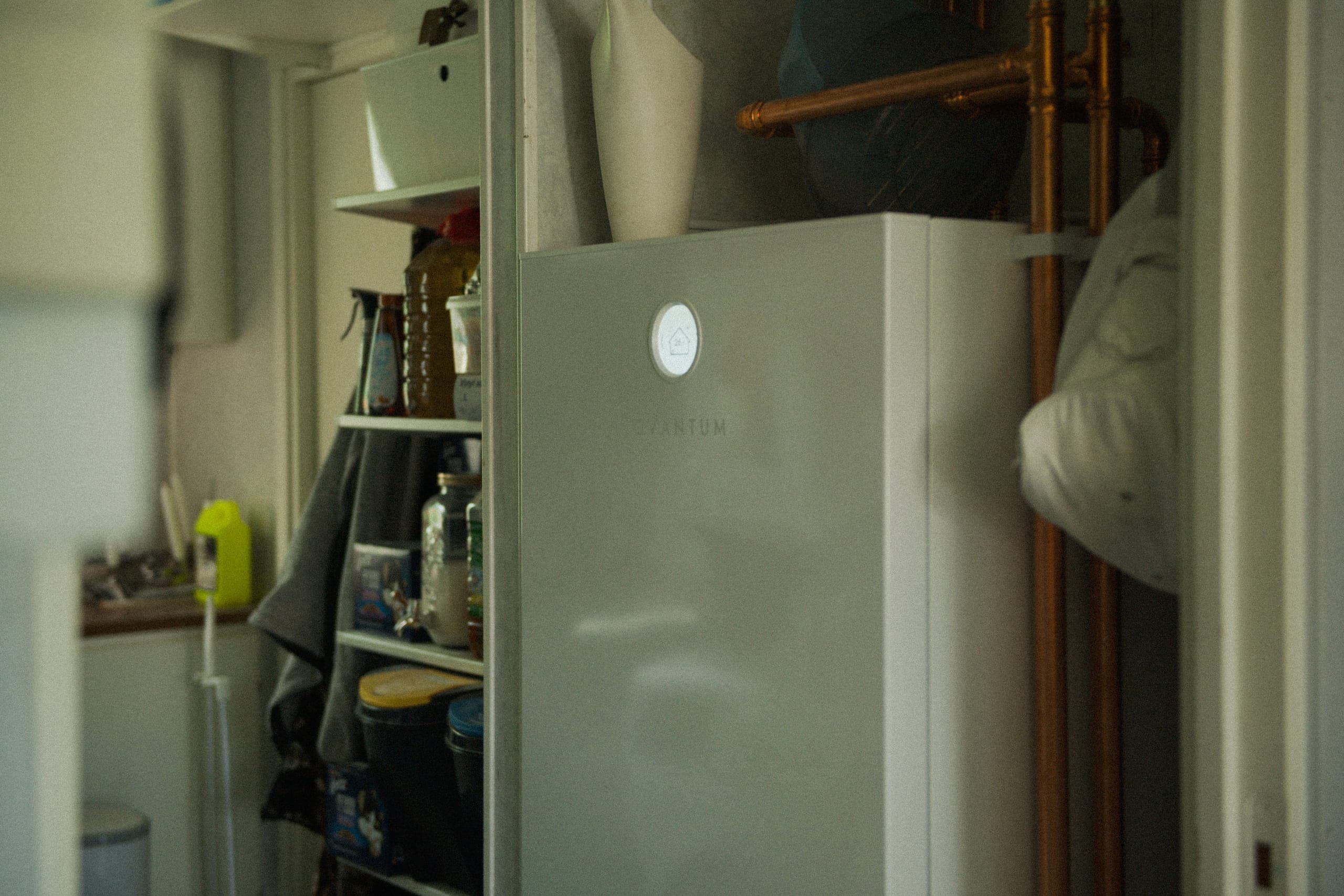
Choosing a heat pump is rarely simple. But if you live north of Umeå, or in an area with long spells of sub-zero temperatures, the demands on the system are even higher. A pump that performs excellently in Malmö in January may have to work considerably harder in Luleå on the same night.
It's not about better or worse technology – it's about the right technology for the climate. And about how the systems actually perform during a cold week in February that drags on.
Below we go through what you need to weigh up: system type, running costs, sizing, and how the whole energy solution fits together.
110–160 tkr
cost of a ground-source heat pump replacement using an existing borehole (after ROT)
130–190 tkr
installation cost for an air-to-water heat pump
40–50 years
typical lifespan of a borehole
Why the climate changes the numbers in the north
An air-to-water heat pump works against the outdoor air. The colder it is, the more electricity is needed to produce the same amount of heat – and on the coldest days the efficiency drops and the system often has to use supplementary electric heating. Modern models can cope down to around –20 to –25 °C, but with clearly lower efficiency.
Ground-source heating works differently. The heat is drawn from the bedrock, where the temperature is relatively stable throughout the year, which gives more even performance even during long cold spells. Many heat pump comparisons are based on a central-Swedish climate – that gives a misleading picture if you live in Norrbotten or Västernorrland.
Ground-source or air-to-water – what decides the choice in northern Sweden?
If you already have a borehole and are replacing an older ground-source heat pump, the choice is usually simple. Ground-source heating generally gives lower and more stable running costs over time, especially in colder climates. A replacement normally costs 110,000–160,000 kr after the ROT deduction if the borehole can be reused.
If there is no borehole, the calculation becomes more complex. With a new borehole, the total cost can land at 180,000–250,000 kr depending on the conditions. An air-to-water heat pump is cheaper to install – around 130,000–190,000 kr – but has somewhat higher running costs during the cold months.
In northern Sweden it is not the occasional sub-zero day that is decisive, but how long the cold lasts. In the very northernmost areas, ground-source heating is therefore often the stronger option, because the system delivers steady output even during prolonged cold spells.
Which practical differences show up in everyday life?
There are three areas worth knowing about before you choose a system.
Defrosting
At low temperatures combined with high humidity, an air-to-water heat pump needs to defrost regularly. During defrosting it temporarily produces less heat, which affects the momentary efficiency. In colder and more humid climates this can be noticeable both in comfort and in running economy.
Noise and placement
Air-to-water requires an outdoor unit. That makes noise level and placement important, especially in densely built-up areas. Modern heat pumps are considerably quieter than earlier generations, but the installation needs to be planned properly from the start.
Lifespan and long-term investment
A borehole for ground-source heating has a very long lifespan – often 40–50 years or more. The heat pump itself, like an air-to-water pump, normally needs replacing after about 15–20 years. The difference is that the borehole is a lasting asset, whereas an air-to-water solution is to a greater extent replaced in its entirety at a future changeover.
How important is sizing?
Correct sizing is decisive – regardless of system type. An undersized heat pump works harder, draws more electricity and wears out faster. An oversized pump runs in short cycles, which also increases wear.
In northern Sweden it is especially important to take the house's design temperature into account – the lowest outdoor temperature the house should handle with minimal supplementary electric heating. It differs markedly between Gothenburg and Gällivare. A quote that does not clearly account for this should be followed up with questions.
What does the electricity price mean for the savings?
The savings are directly affected by the electricity price. The higher the electricity price, the greater the value of every efficiently produced kilowatt-hour. At low electricity prices the difference between the systems shrinks – while high prices amplify the value of a high and stable efficiency, especially in a cold climate with high winter consumption.
The heat pump is only part of the whole
A heat pump delivers the greatest effect when it is part of a coherent energy system. Without working together with solar panels, a battery and smart control, it is optimised as an individual component instead of as part of the whole.
When electricity is cheap at night, the heat pump can store heat in the house. The battery can shave the capacity peaks that would otherwise raise the grid fee, and solar panels cover part of the daytime consumption. In some systems the power draw can even be balanced across phases to reduce the load on the main fuse. Together they create a more stable and more cost-effective solution than the individual parts on their own.
There is no universal answer to whether ground-source or air-to-water is best in northern Sweden. But there is a right answer for your house – based on the plot, the existing installation, the climate zone and what the rest of the energy system looks like.
A modern heating solution delivers the greatest effect when it is planned as a whole and controlled based on the electricity price and actual consumption. Want to know what suits your home, and what it would cost per month? Fill in your details and Elvy will put together a proposal based on your house and your energy use.
Keep readingMore to explore
- Heat pump
What does a new heat pump cost per month?
A new heat pump rarely costs what you think it does – and often more than you budgeted for. Here we break down the real monthly cost, whatever way you choose to finance the switch.
- Heat pump
Checklist: how to prepare your home's heating before winter's electricity prices
We know — winter feels a long way off right now. But summer is when your decisions still have time to take effect. Here's the checklist that helps you prepare your home's heating in time, so the January bill doesn't come as a nasty surprise.
- Heat pump
Heat pumps in southern Sweden: which one suits your house?
A rundown of which heat pump works best for houses in southern Sweden, based on the house's conditions and the region's climate.
0+
Homeowners no longer manage their own power and heat. They decided they had better things to do.
Curious to do the same?