Solar
Your house as a power plant: how the prosumer works in the Swedish grid
The electricity grid is changing fundamentally. And in that change, your house plays a role few foresaw ten years ago. Not as a consumer of electricity, but as a producer, a storage unit and an active participant in the energy market.
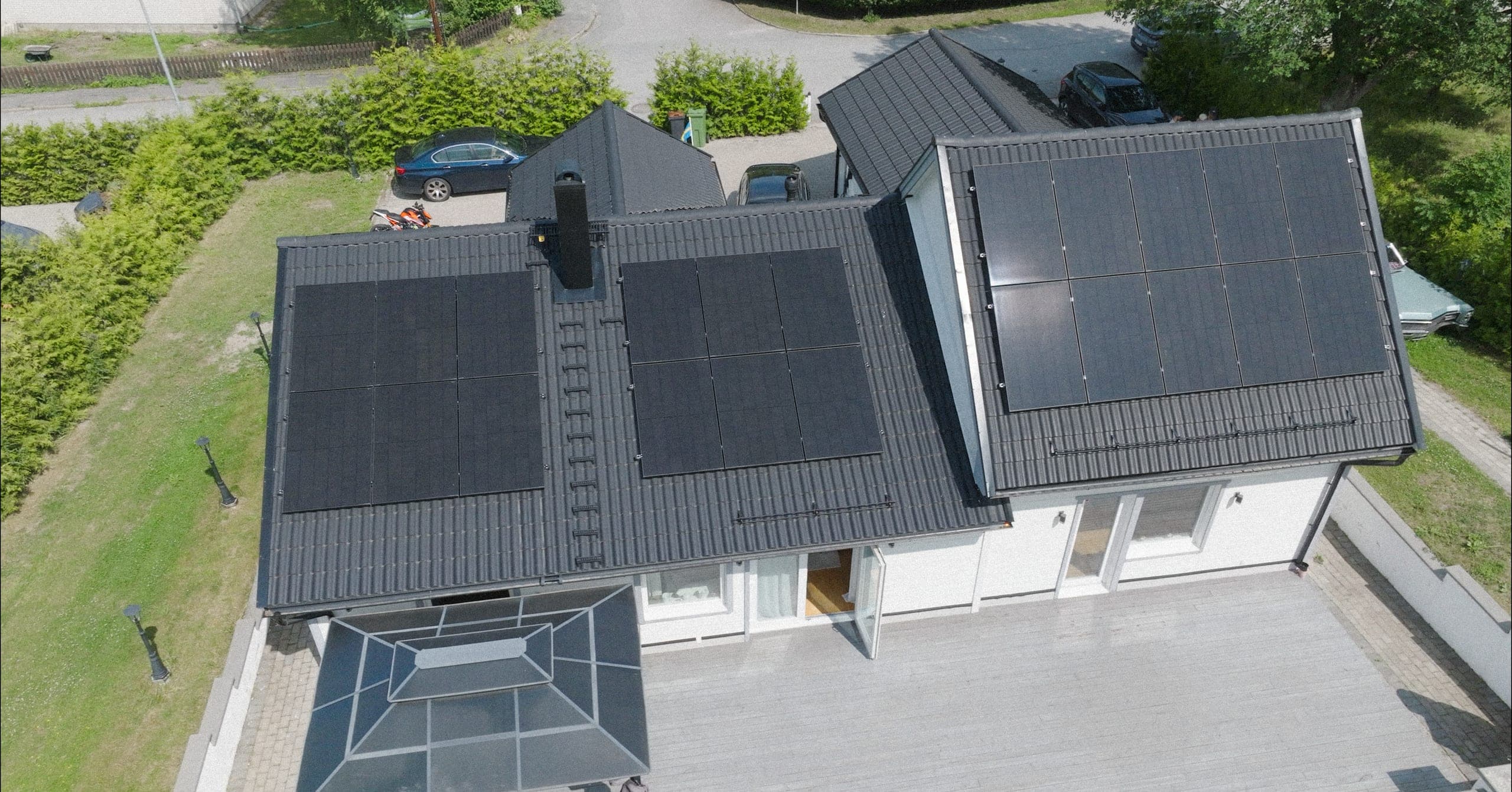
For most of the 20th century, the logic was simple: large power plants produced electricity, power lines carried it, households consumed it. You stood at the end of the chain and paid whatever the bill showed.
That logic no longer holds. The Swedish electricity grid is undergoing a transformation, and part of that transformation is playing out on the rooftops of houses across the country. Solar panels produce electricity. Batteries store it. Smart systems continuously decide when electricity should be used, stored or sold. It is no longer just the future — it is reality for a growing number of homeowners.
The question isn't whether you can become an active player in the energy market. It's whether you have the right system to do it without having to become an energy expert along the way.
What is a prosumer, and why does it matter?
A prosumer is someone who both produces and consumes electricity. It's a blend of the words producer and consumer. Ten years ago it was a niche concept. Today it's a practical reality for a growing number of Swedish homeowners with solar panels, a battery and a heat pump.
Going from passive consumer to active prosumer isn't about becoming an energy expert. It's about letting the system work smarter with the conditions you already have.
What does AEO — automatic energy optimization — do?
AEO, Automatic Energy Optimization, is the software that controls how the energy system behaves in practice. It's what decides whether the heat pump should run at three in the morning when electricity is cheap, or later when the price is higher. By adapting operation to the price swings across the day, costs can be lowered without you noticing any difference in everyday life.
The same logic governs the battery: should it charge now, or save capacity for the evening's demand peaks? The system factors in weather forecasts, the household's actual consumption patterns and how quickly your particular house loses heat — and makes its decisions accordingly.
Without control, an energy system is a collection of good components. With control, it becomes something that actually works for you.
Can your battery help the entire grid?
The Swedish electricity grid must constantly maintain a stable frequency — 50 hertz. When production and consumption are out of balance, someone has to adjust quickly. Svenska Kraftnät pays for that capacity, and today it can come from batteries in ordinary homes.
That means your battery, when it isn't being used to shave your own demand peaks, can help stabilize the grid and in some cases generate income that improves the overall economics of the system. That's the kind of systems thinking that changes what a home can do.
You need more than just good hardware
It's easy to think the right components solve the problem. An efficient heat pump, modern solar panels, a large battery: shouldn't that be enough?
The answer is no, and the reason is simple: the components have to communicate. A heat pump that doesn't know the battery is full, that the electricity price has just dropped and that the sun will be shining for the next four hours makes worse decisions than one that knows all of it. That's the difference between having good tools and having a system.
Capacity tariffs, where you pay more if you use a lot of electricity at the same time over short periods, make this coordination increasingly important. A battery that can step in and support the house when the load is high doesn't just flatten the peaks — it reduces the part of the grid fee that is calculated on those very peaks.
What it means for you as a homeowner
The transformation of the Swedish electricity grid isn't a project waiting to start. It's under way. Capacity tariffs are spreading. The ancillary-services market for frequency regulation is growing. More and more households produce electricity instead of only consuming it.
The homeowner who chooses the right system today isn't just positioning themselves for lower electricity bills in the short term. They're positioning themselves for an energy market that increasingly rewards flexibility, storage and smart control.
Elvy's energy subscription combines solar panels, battery and heat pump as one coherent system. It's controlled by AEO and sized for your house, your consumption and your everyday life. Not three products you coordinate yourself, but a system that largely takes care of itself.
Your house already has what it takes. The question is whether it has the right system to use it.
Keep readingMore to explore
- Solar
How much can you save with solar panels in 2026?
Solar panels can cut your electricity bill significantly, but how much depends on factors that many guides miss. Here we walk through what actually drives the savings and what you can realistically expect.
- Solar
Do I own my solar panels? What applies with purchase, leasing and an energy subscription
Who owns the solar panels on your roof depends entirely on the contract you have. Here we untangle the differences between buying, leasing and an energy subscription — and what it means in practice.
- Heat pump
What does a new heat pump cost per month?
A new heat pump rarely costs what you think it does – and often more than you budgeted for. Here we break down the real monthly cost, whatever way you choose to finance the switch.
0+
Homeowners no longer manage their own power and heat. They decided they had better things to do.
Curious to do the same?