Solar
Do I own my solar panels? What applies with purchase, leasing and an energy subscription
Who owns the solar panels on your roof depends entirely on the contract you have. Here we untangle the differences between buying, leasing and an energy subscription — and what it means in practice.
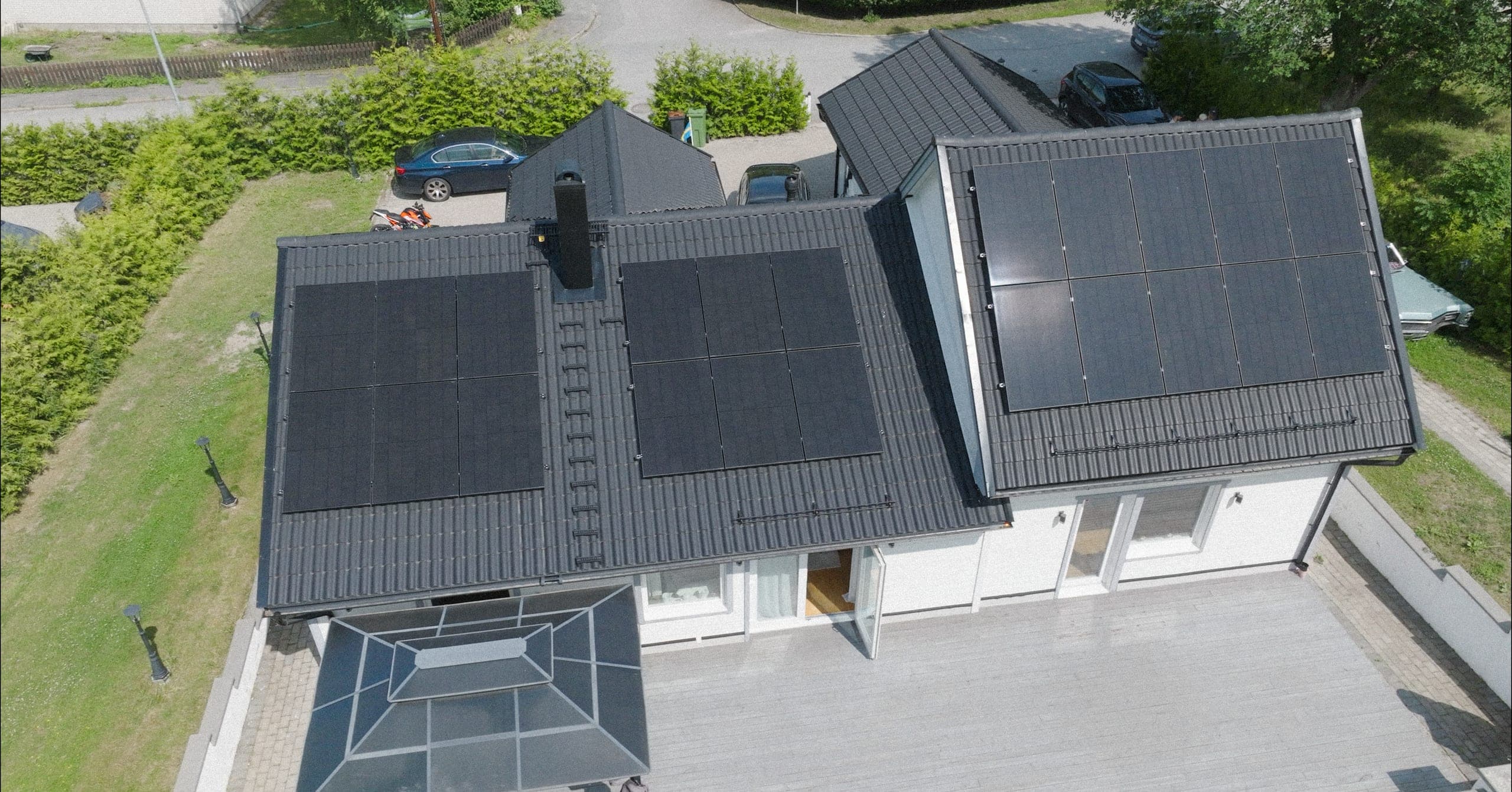
If you buy the system outright, you own it from day one. If you lease it, you don't own it — but you pay to use it. If you choose an energy subscription like Elvy's, the model is different again: the system is owned by us, but it sits on your roof and works exclusively for your household.
The legal side of solar panels, then, is not about the technology but about the contract. What that means in practice — when you move, sell the house or if something breaks — is what we go through here.
Buying — you own everything
Full ownership from day one. The system is part of the property and transfers with a sale. You are responsible for maintenance and repairs.
Leasing — you use it, you do not own it
The leasing company owns the system. You pay a monthly fee without carrying the technology risk, but the contract has to be dealt with when you sell the house.
Energy subscription — a fixed cost, no responsibility
Elvy owns and maintains the system. You pay a fixed monthly cost and avoid unexpected costs for service or repairs.
When you sell the house
An owned system transfers with the property. Leasing and subscriptions require active handling — usually the new owner takes over the contract.
When you move
Taking an owned system with you is rarely economically justifiable. With a subscription, moving is easier — there are always three clear options.
The mortgage
An owned system can contribute positively to the property valuation. Leasing and subscription contracts should be clearly documented ahead of borrowing or a sale.
What applies when you own the solar panels yourself?
If you have bought a solar panel system with your own money or through a loan, you own it. It is your property, just like a new kitchen or a new roof, and is part of the property when you sell. That means you are responsible for repairs and take the risk if the system performs worse than expected.
Solar panels that are permanently mounted on the roof count in most cases as property fixtures and transfer with the house in a sale, unless otherwise agreed. So the buyer takes over the system. It is important to be clear in the transfer agreement about what is included, the age of the system and whether the warranty still applies. A well-maintained system can be a selling point. An old, undocumented installation can be exactly the opposite.
What does leasing solar panels involve?
Private leasing of solar panels works much like car leasing. You pay a monthly fee to use the system, but ownership stays with the leasing company. That means you cannot sell the system — but it also means you do not carry the risk of repairs or the technology ageing.
When you sell the house, the leasing contract has to be dealt with. Either you buy out the system, let the new owner take over the contract if the leasing company approves it, or you end the contract early — which often comes with a cost.
How does an energy subscription like Elvy's work?
With an energy subscription you do not own the system. But unlike leasing, maintenance, operation and optimisation are included in the same fixed monthly cost. You pay for a working energy solution, not for owning the hardware.
In everyday life it often matters less who owns the panels. What matters is who carries the responsibility when something goes wrong — and who makes sure the system works as well in year eleven as in year one. With Elvy you own no equipment: Elvy installs, owns and maintains the system for the entire contract period for a fixed monthly cost.
When you sell the house, there is the option of letting the new owner take over the energy subscription. For the buyer, that means a house with a modern energy solution, predictable operating costs and no large upfront investment — which many see as an advantage.
Do solar panels or a subscription affect the mortgage?
An owned solar panel system is in most cases seen as part of the property and can in some cases contribute positively to the valuation. If the system is tied to a leasing or subscription contract, the bank may want to understand the terms, especially with new borrowing or a sale. This is rarely a problem, but it is wise to check in advance how the contract is handled when ownership changes and to have clear documentation ready for buyers and the bank.
What happens to the solar panels when you move?
If you own the system and want to take it with you, it is technically possible but rarely economically justifiable. Dismantling, transport and reinstallation often cost more than it is worth — and a new system sized for the new house's conditions gives better results.
With an energy subscription, moving is easier to handle. There are usually three options: transfer the subscription to the new owner, buy out the system at an agreed price, or end the contract according to its terms. The most common is that the next owner takes over the subscription and gets a house with a working energy system from day one.
Ownership or peace of mind — what do you value most?
Owning means full control. You choose your own service partner and benefit from any increase in value. At the same time, you carry the responsibility for maintenance, warranty matters and keeping up with new technology. Subscribing means less responsibility and greater predictability. You pay for the function — not for the hardware — and someone else is responsible for operation and long-term performance.
Which suits you best depends more on personality and priorities than on technology. What we do know is that most homeowners do not want to become experts in energy systems. They want the panels on the roof to do their job — year after year — without it requiring their time or attention.
Keep readingMore to explore
- Solar
How much can you save with solar panels in 2026?
Solar panels can cut your electricity bill significantly, but how much depends on factors that many guides miss. Here we walk through what actually drives the savings and what you can realistically expect.
- Solar
Your house as a power plant: how the prosumer works in the Swedish grid
The electricity grid is changing fundamentally. And in that change, your house plays a role few foresaw ten years ago. Not as a consumer of electricity, but as a producer, a storage unit and an active participant in the energy market.
- Heat pump
What does a new heat pump cost per month?
A new heat pump rarely costs what you think it does – and often more than you budgeted for. Here we break down the real monthly cost, whatever way you choose to finance the switch.
0+
Homeowners no longer manage their own power and heat. They decided they had better things to do.
Curious to do the same?