Heat pump
Ground-source or air-to-water? We'll help you make the right choice
Ground-source and air-to-water are the two most common choices for homeowners. They work in different ways, suit different homes and differ in price. Here's what you need to know.
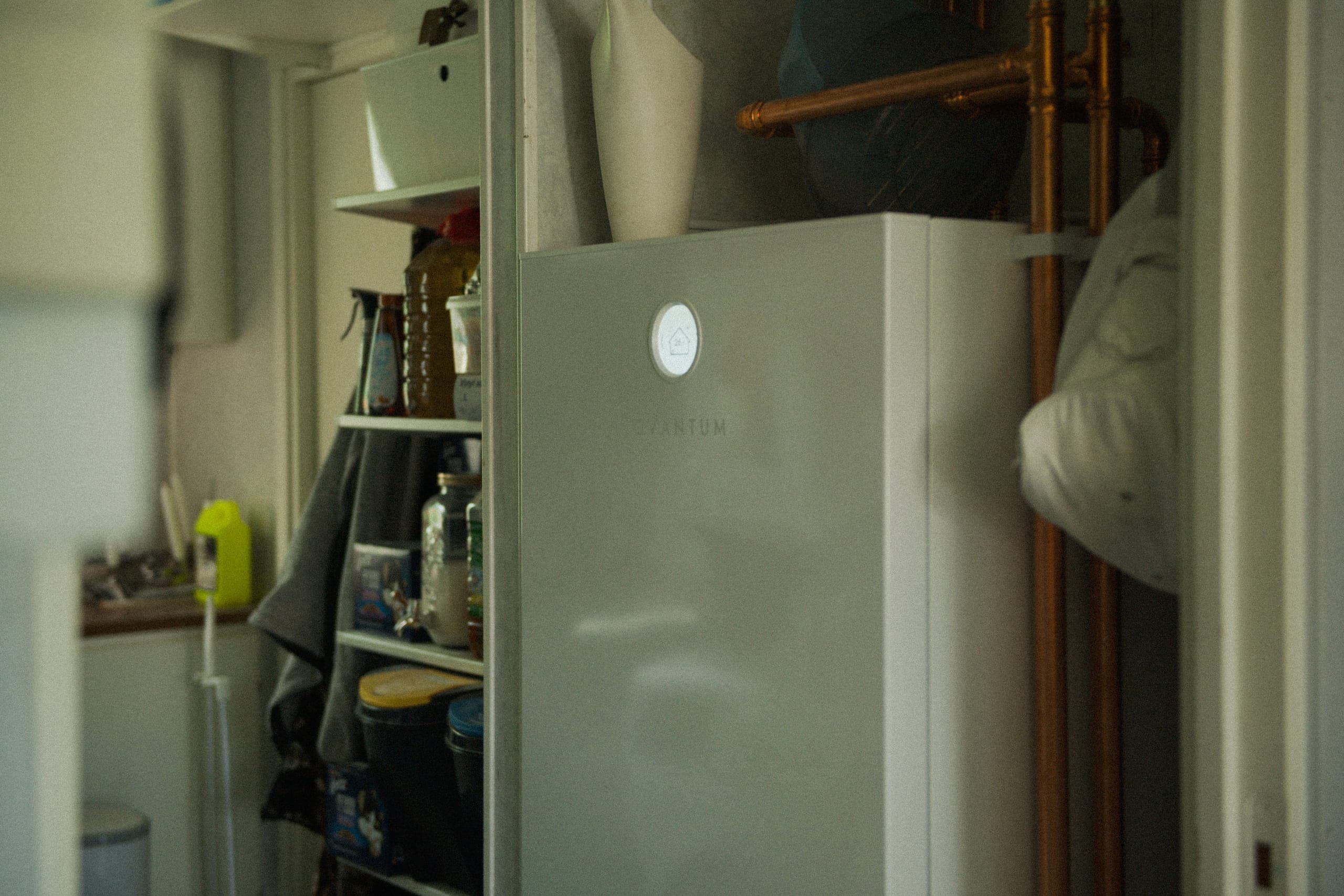
Thinking about ground-source or air-to-water and not sure which option suits your house? You're not alone. Both are effective solutions, but they work in different ways, suit different types of houses and differ clearly in installation cost.
It's easy to get bogged down in technical details like COP ratings and borehole depth. What you really want to know is simpler: which system gives lower bills and fewer worries in your particular home? That's the question we'll help you sort out.
How do ground-source and air-to-water each work?
Ground-source draws heat from the ground through a borehole, typically 100 to 200 metres deep. The temperature in the ground stays relatively constant year-round, which lets the system run steadily whatever the weather.
Air-to-water draws heat from the outdoor air and distributes it through the house's water-based heating system. Installation is simpler, but output falls when it's cold outside. On the coldest days supplementary electric heating is often needed, precisely when the heating demand is at its greatest.
What do the two systems cost to install?
An air-to-water heat pump usually costs 130,000 to 190,000 kronor installed after the ROT deduction. Ground-source with an existing borehole often comes in at 100,000 to 160,000 kronor. If you need to drill a new borehole, the total cost is usually 180,000 to 250,000 kronor, depending on the conditions on your plot.
Both options mean a large upfront investment. That's one of the most common reasons homeowners put off the decision and, in the meantime, pay more for their electricity than they need to.
Which system suits your home?
The answer depends above all on three things: how the house is heated today, where in Sweden you live and whether there's already a borehole on the plot.
If you have an existing borehole and are replacing your ground-source heat pump, the choice is often easy. Ground-source gives stable operation and low running costs over time, especially in colder climates. If you live in Götaland or Svealand without a borehole, air-to-water can be more cost-effective. Installation is quicker and needs no groundwork.
If you live north of Umeå, ground-source is usually the stronger option, because it delivers more even output through long cold spells.
Common mistakes when choosing a heat pump
Whichever system you choose, the heat pump is only one part of the whole. A pump that works in isolation, without cooperating with solar panels, battery and smart control, rarely delivers the savings most people hope for.
Many people install a new heat pump and see the electricity bill drop, but not as much as they'd counted on. Often that's because the pump is optimised as a single component rather than as part of a larger system. It's the difference between changing one tyre and giving the whole car a full service.
The real savings appear when production, storage and heating work together. The heat pump can run more when electricity is cheap, the battery can shave demand peaks and the solar panels can cover part of the heating during the day. Together they deliver a larger and more stable saving than each part on its own.
Existing borehole
If you already have a borehole, ground-source is usually the obvious choice. Stable operation and low cost over time.
Limited plot
A small plot, an urban location or bedrock near the surface makes air-to-water the most practical option.
Cold climate
In northern Sweden, with long cold winters, ground-source delivers stable output when the need is at its greatest.
Quick installation
Air-to-water needs no groundwork and can be installed faster. Good if the replacement is urgent.
Water-based system
Both options require water-based heat via radiators or underfloor heating. If you don't have it, a conversion cost is added.
Whole-system perspective
If you're also planning solar panels and a battery, both options work. It's how the whole system is sized and controlled that decides the saving.
Ground-source and air-to-water are both good solutions. The right choice depends on your house, your plot and what the rest of your energy system looks like. There's no universal answer.
What we do know is that the choice shouldn't be made in isolation. A modern heat pump delivers the most when it's part of a system where solar panels, battery and heat pump work together and are controlled around the electricity price.
With Elvy's energy subscription, we install solar panels, battery and heat pump as one integrated solution with no start-up fee. You pay a fixed monthly cost and get a full operating guarantee for the entire contract period. The system is continuously controlled by our software, which adapts consumption, storage and production to the electricity price and the weather forecast.
Keep readingMore to explore
- Heat pump
What does a new heat pump cost per month?
A new heat pump rarely costs what you think it does – and often more than you budgeted for. Here we break down the real monthly cost, whatever way you choose to finance the switch.
- Heat pump
Checklist: how to prepare your home's heating before winter's electricity prices
We know — winter feels a long way off right now. But summer is when your decisions still have time to take effect. Here's the checklist that helps you prepare your home's heating in time, so the January bill doesn't come as a nasty surprise.
- Heat pump
Heat pumps in southern Sweden: which one suits your house?
A rundown of which heat pump works best for houses in southern Sweden, based on the house's conditions and the region's climate.
0+
Homeowners no longer manage their own power and heat. They decided they had better things to do.
Curious to do the same?