About Elvy
Why choose an energy subscription over a loan? The Elvy model explained
Replacing your heat pump or installing solar panels is one of the biggest financial decisions you'll make for your home. Here we explain why a fixed monthly subscription is often a smarter choice than borrowing money, and what Elvy's model means in practice.
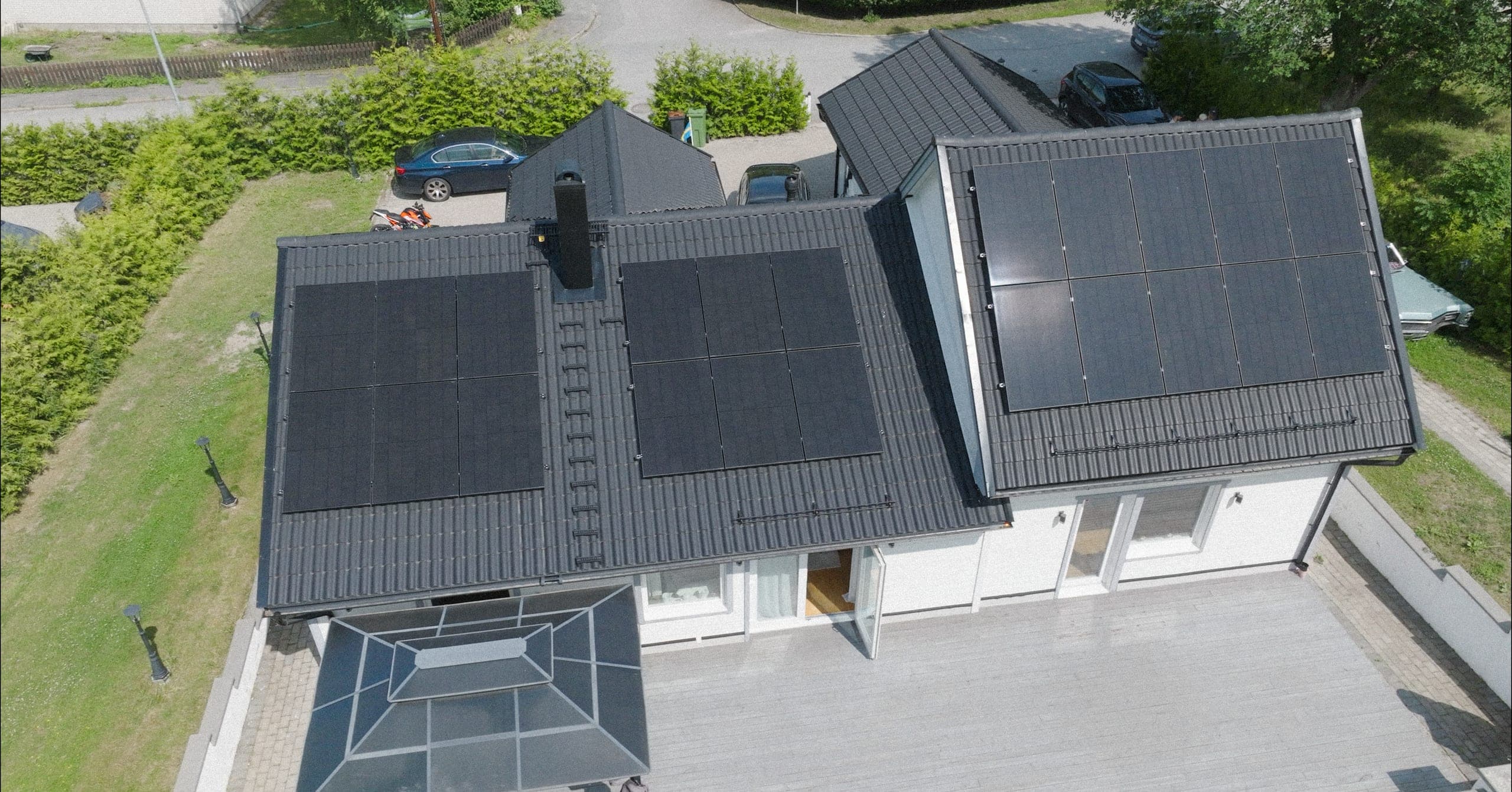
Most homeowners weighing up solar panels, a battery and a heat pump start with the same question: what does it cost? The answer, somewhere between SEK 150,000 and 400,000 depending on scope, is often what stalls the process. Either they take out a bank loan with the associated interest costs, or they put the decision off until their finances feel more stable.
The problem is that the right moment rarely arrives. Meanwhile the electricity bills keep ticking over, often with an older, less efficient heating system that costs more than it needs to. Elvy's model starts from a different question: what happens if you don't have to choose between being able to afford it today and making a decision that's wise in the long run?
Fixed monthly cost
You know exactly what the energy solution costs each month throughout the contract period, with no unexpected extra costs.
No upfront fee
Elvy installs solar panels, a battery and a heat pump without you paying anything up front.
Service included
Repairs, maintenance and operational optimisation are Elvy's responsibility throughout the contract period.
No technical risk
You don't have to make decisions about upgrades or deal with breakdowns, Elvy takes care of that.
Transferable when you sell
The next owner can take over the energy subscription, which can be an advantage when you sell your house.
Optimised for the electricity market
The system is managed intelligently to lower your electricity cost, without you having to follow spot prices or capacity tariffs.
How does Elvy's energy subscription work?
Elvy installs solar panels, a battery and a heat pump as one connected system with no upfront fee. Instead you pay a fixed monthly cost over the contract period, which makes a large part of your total energy cost more predictable. It's an energy subscription, much like broadband or a streaming service, but for your whole home's energy solution.
The fixed monthly cost includes the equipment, the installation, a full operating guarantee and ongoing optimisation. If something breaks, whether it's the heat pump, the battery or the inverter, it's Elvy's responsibility to fix it at no extra cost. You don't own the installation, but you don't need to own it to benefit from the savings.
How does an energy subscription compare to a bank loan?
A complete installation with solar panels, a battery and an air-to-water heat pump costs around SEK 200,000 to 300,000 today. If you finance it with a mortgage at 4 to 5 percent interest, your monthly cost rises straight away. At the same time, you take on all the risk for future repairs, technical developments and operating problems.
With an energy subscription from Elvy, you know in advance what the energy solution costs each month throughout the contract period. You avoid unexpected costs tied to the equipment itself – service, maintenance and operation are included. Nor do you have to make decisions about technical upgrades as the technology moves forward. That responsibility sits with Elvy.
Owning technology that ages has a cost. A heat pump often has a lifespan of 10 to 20 years, and the final years are usually the most expensive to run. With a subscription you avoid that uncertainty.
The most common objection: it sounds too good to be true
That's a reasonable reaction. Getting a modern energy system installed with no upfront fee raises questions.
Elvy earns money by optimising the system against the electricity market, in part by letting the battery take part in support services that stabilise the grid. Svenska kraftnät, the Swedish national grid operator, pays for these services.
At the same time, the system is designed not to worsen your household finances, and the optimisation is carried out with the goal that the overall outcome is positive for you as a customer. If an action on the electricity market would mean higher grid fees or a worse outcome for you, it's avoided as far as possible.
So this isn't a model where Elvy profits from your loss. The revenue depends on the system working well for both you and the grid.
What happens to the subscription if you sell your house?
The contract period is a long-term commitment and should be taken seriously. If you sell your house, there's the option, as part of the sale agreement, to let the next owner take over the energy subscription.
For the buyer, that means a house with a modern energy solution, a predictable fixed monthly cost and no need for a large initial investment. In many cases that can be an advantage in a sale.
There's also the option to buy out the installation if needed. If Elvy as a company were no longer around, your energy installation wouldn't be affected. Instead of Elvy paying the cost of heating, household electricity and the leasing fee, you pay these directly yourself. At the same time, you take over the energy system's revenue streams.
Service and repairs remain included in the lease and are handled by the leasing company. You can therefore reasonably expect a similar net cost for your energy, but with somewhat greater variation across the year.
Who is Elvy's model right for?
Elvy's energy subscription isn't right for everyone. Someone with capital, a technical interest and the wish to own and optimise everything themselves may have good reasons to do so. But most homeowners don't want to become energy experts. They want a warm home, a predictable electricity cost and a daily life where the energy system simply works.
At its core, the choice is about where the risk should sit. Owning means you take responsibility for repairs, technical developments and breakdowns. Subscribing means you pay a fixed monthly cost to be free of exactly that.
For anyone who values predictability and peace of mind over time, an energy subscription is often the more rational choice, not because it's always the cheapest on paper, but because it better reflects how most people actually live and make decisions.
What works out cheapest over time?
In some cases it can be cheaper to own the system yourself – especially if you have capital and are prepared to take on both the risk and the responsibility. The subscription model is therefore not only about price, but about swapping an uncertain investment for a predictable cost.
The biggest difference often lies not in the equipment itself, but in how the system is run. With intelligent control, the heat pump, battery and solar panels can work together to reduce both energy costs and peak power draw.
Some systems use technology that enables phase balancing and more precise control of the power flows in the house. This can deliver further savings as capacity tariffs become more common. A house with an older heat pump, for example, can achieve both lower energy consumption and a more even power draw with an optimised system – which affects both the electricity bill and grid fees.
Keep readingMore to explore
- About Elvy
Why we started Elvy: a vision for simpler energy in Sweden
Behind Elvy is a simple idea: you should be able to have electricity and heating in your home without having to become an energy expert. Here is the story of why we started the company – and what we want to change.

- About Elvy
How the installation works: the Elvy journey from first call to finished system
What actually happens after you fill in the form? A walk-through of the Elvy journey: how long it takes, what's included and where the bottlenecks tend to show up.
- About Elvy
Elvy's operating guarantee: what happens if the heat pump, battery or solar panels break down
With Elvy's operating guarantee you never have to pay for a repair during the contract period. Here is what is actually included, how it works, and what happens in the scenarios customers worry about most.
0+
Homeowners no longer manage their own power and heat. They decided they had better things to do.
Curious to do the same?