Opinion -
The Reluctant Energy Trader – a story about living in a house in Sweden
An EY study (published in Di.se, 03.06.26) shows that Swedes' trust in the electricity market is now the third lowest in the world. The industry's answer is more information and clearer invoices. Is it just me who's going crazy here? I don't want to play-act as an Energy Trader in my spare time.
Meanwhile, I'm being smothered by the information and energy data that the electricity companies seem to want me to analyse and act on. Somewhere, buried deep in consumption statistics and energy acronyms, lies the answer to when and how I should run our washing machine. Is the Dow Jones open yet? And when does the Nikkei close?
I'm being flippant, sure, but this really does seem to be what the electricity companies expect of us. Sweden has built one of the world's most advanced electricity systems, and yet it has the third-worst customer trust in the world. 56 percent of Swedes believe the price increases are driven by energy companies chasing profits, according to that same EY survey. And nearly half say they would like to hand their energy choices over to AI. It is a damning verdict on an entire industry that has spent decades trying to solve the wrong problem.
That is where the conversation about Swedish energy ought to begin. Not with nuclear power or the spot price, but with the fact that a majority of the Swedish people have just collectively broken up with their electricity companies. The verdict landed this week: according to the EY Energy Consumer Confidence Index 2026, Sweden has plunged to eighteenth place out of twenty. Trust has fallen 7.6 percentage points since 2023, the second-largest drop anywhere in the world. Only Greece and Japan rank worse.
Why? Because for decades the industry has tried to make the consumer smarter. More informed. Better at reading contracts and understanding the spot market. Apps, campaigns, comparison sites, smart meters, hourly prices. We have taught people to day-trade hot water, in the belief that if the customer only had all the information at hand, they could make the best decisions.
It never worked — and now it is worth pausing to ask ourselves why we ever thought it would. The average Swede who is meant to optimise their electricity use also has to weigh preschool drop-off against pick-up, football practice on Tuesday, a boss who wants the report by tomorrow, a dishwasher that breaks down, a parent in hospital and a daily juggle that is already missing pieces. And on top of that life, you are also supposed to find time to compare fourteen electricity contracts with different lock-in periods, read six pages of terms, understand the difference between variable and hourly pricing, keep track of capacity tariffs, switch contracts before the promotional price runs out, and pick the right hour to start the washing machine.
It is not reasonable. It has never been reasonable. This is an industry that has offloaded all of its complexity onto its customer and called it freedom of choice. No other industry would have gotten away with it. We don't accept the bank asking us to price our mortgage every week. We don't accept the insurance company asking us to calculate our own premium. But the electricity industry has managed to normalise the idea that the customer should do the work, and then to blame the customer when we can't manage it. EY analyst Anna Hed put her finger on the problem in DI: “The energy industry is almost alone in expecting the customer to understand the whole system behind the service. It is as if you first had to get to grips with the entire music industry before you could use a streaming service.”
Households have run out of the will for it. Not because they are stupid, but because they have worked out that it doesn't pay off. The time it takes to optimise vastly outweighs any potential savings, and the anxiety of not having done it more cleverly yesterday carries a cost that piles up too. Sweden's energy crisis is therefore not only about the price of a kilowatt-hour, but also about the mental burden it places on us.
And that burden is not shared out fairly. Whoever has the time, the money and the knowledge to optimise comes out ahead. Those with the least time, the thinnest margins and, relatively speaking, the highest electricity bills check out entirely. They don't switch contracts, don't open the app, they just pay. The system rewards whoever has time to be a hedge fund manager in their own kitchen, and punishes whoever just wants food on the table and hot water in the tap.
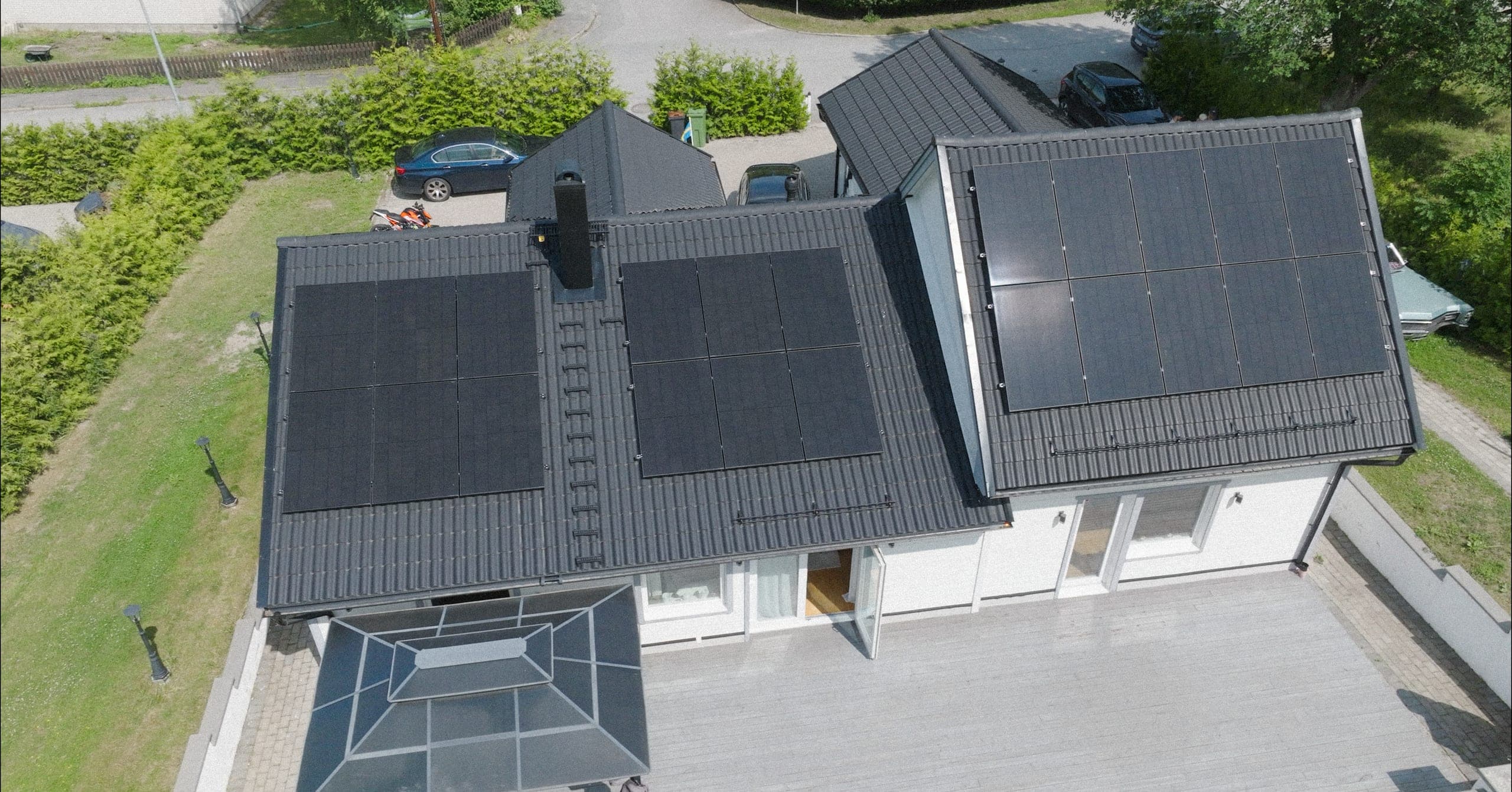
The industry has to stop educating the customer and start making their lives easier. Customers don't want more information, they want less friction. They want energy companies that, instead of selling responsibility, can absorb the risk and deliver the result. The technology has been around for a long time. Solar panels, batteries, heat pumps — that part works. It is the business models that fall short, business models that keep loading households with choices and risks they never asked for.
Politicians have to stop believing they can solve the crisis with more subsidy schemes and forced freedom of choice. Sweden's real capacity reserve sits parked in the country's two million houses. But when the majority of households break up with the industry, the transition grinds to a halt.
That is why we need players who dare to take on the responsibility. Who dare to tell their customer that, from now on, you no longer have to think about all that. We'll take care of it. Pay your fixed monthly cost and we'll sort out the rest. That is basically how every other modern industry works. Spotify doesn't ask you to understand licensing agreements before you listen to music. Netflix doesn't explain distribution rights. The tap in your kitchen doesn't require you to first read the water market's spot price. Electricity ought to be just as boring. And, above all, just as easy.
At Elvy we already have a thousand Swedish households who have chosen the boring option, and every month more of them make the same choice. But that isn't the point. The point is that Sweden faces a choice: keep trying to rescue the energy system through its households, where each of us shoulders the responsibility of being our own local energy expert. Or we accept that this is never going to happen, and instead build the system that every other industry has already switched to, where the complexity and the expertise are owned by the experts and not dumped onto the consumer. EY's report says what the Swedish people think. Now it is the turn of the industry and the politicians to answer.
Keep readingMore of what we're up to
- Opinion -
AI solves Sweden's energy challenge
A quarter of Sweden's electricity use goes to heating our homes. By managing that heat more intelligently, we can shave peak loads and lower costs – without anyone having to become an energy expert. Elvy's founder in an op-ed for Dagens Industri.
- Press release -
Elvy signs framework agreement with Nordic Energy Partner to meet rising customer demand
Elvy's energy subscription keeps growing in popularity among Swedish homeowners. Now the company is signing a framework agreement with Nepab to secure a sustained pace of installation.
- Press release -
Energy company secures SEK 70M – Klarna veteran steps in as chair
Tech company Elvy, the company behind the world's first subscription service for household energy, has closed a new funding round of SEK 70 million. The round is led by Daft Capital and Essential Capital, with participation from Mathias Kamprad among others. In parallel, Knut Frängsmyr joins as chair of the board.
0+
Homeowners no longer manage their own power and heat. They decided they had better things to do.
Curious to do the same?