Electricity prices
The expert's guide to the electricity price: how to protect your home from the next price shock
Electricity prices swing more than ever. This guide explains what actually drives the swings – and what you as a homeowner can do to become less sensitive to the next shock.
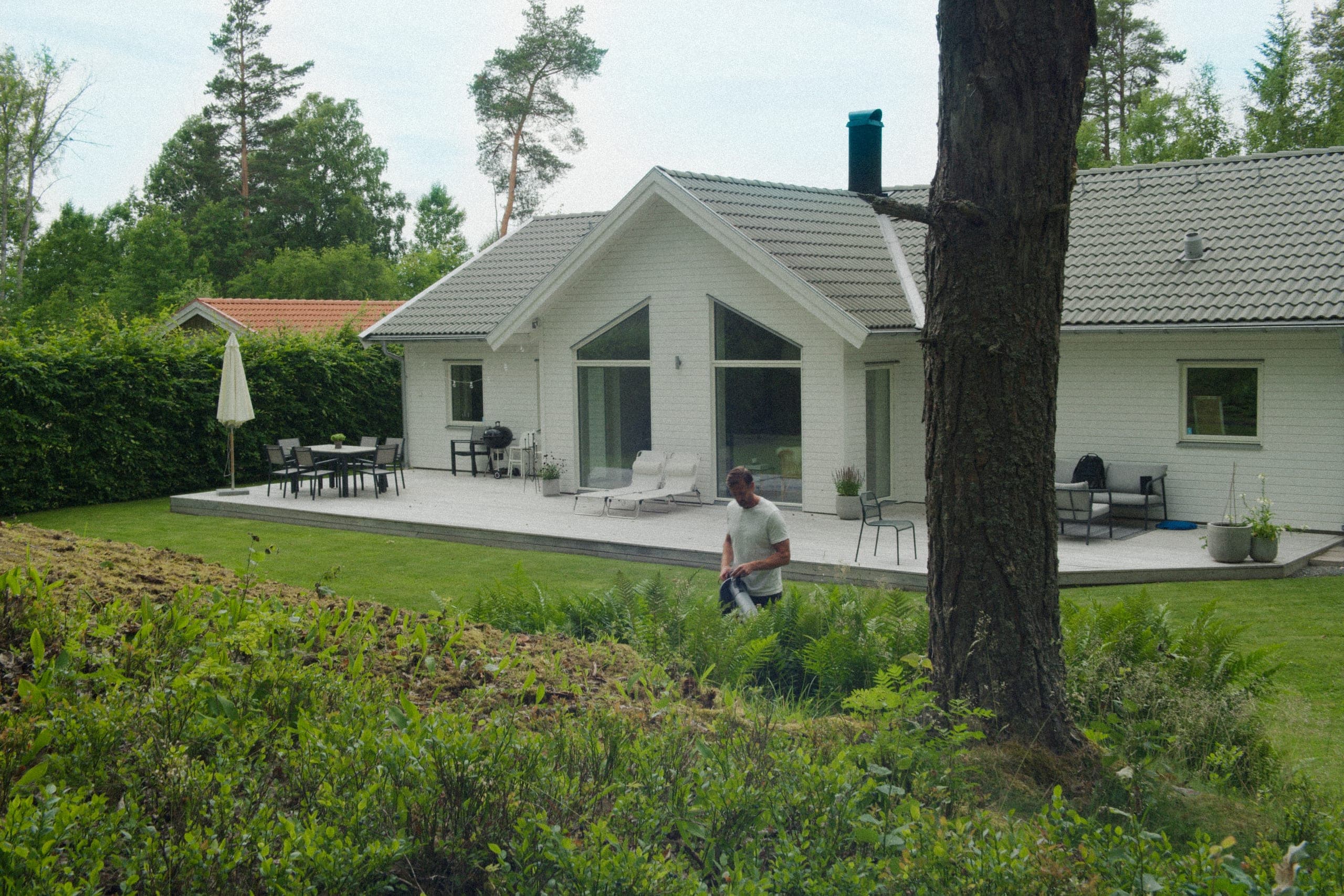
Few things stir up as much worry in a homeowner's everyday life as an electricity price in free fall – or in free ascent. This past winter has shown that the swings between the day's cheapest and most expensive hours can be several kronor per kilowatt-hour, and the outlook is that the variations will likely grow larger, not smaller. For those of you who heat your home with electricity, it quickly becomes a piece of arithmetic that genuinely affects the monthly budget.
This guide is written for those of you who want to understand what actually drives the electricity price, why homes are especially exposed, and what you can concretely do to protect your finances ahead of the next price shock. We walk through the basics of the market, which measures have the greatest effect, and why a small power plant of your own on the roof has become one of the strongest defenses against an unpredictable electricity market.
Total electricity consumption
The more electricity the house draws, the harder price movements hit. Electrically heated homes are especially exposed.
When you use the electricity
Consumption in the morning and evening costs more than the same consumption at night on an hourly-price contract.
Capacity peaks
How much electricity you draw at the same time affects the grid fee, not just the total amount.
Your own production
Solar panels reduce purchased electricity when the price is often high during the day, especially in spring and summer.
Storage
A battery shifts cheap electricity through time – from day to evening, from low- to high-price hours.
Smart control
Without control, good equipment is just good equipment. With control, it becomes a system.
Before we talk about solutions, it's worth understanding why the price swings so much in the first place. It isn't chance, and it isn't just the weather either. It's a combination of physics, geography and an electricity system in transition.
What actually drives the electricity price?
In Sweden, the electricity price is set hour by hour on the Nordic power exchange, where production meets consumption. When consumption is high and supply is scarce – for example on a windless February night – the price rises. When the wind blows, the sun shines and consumption is low, it falls. That's the market in its simplest form.
Three factors, however, are driving the big swings right now:
The weather governs more than ever
As a larger share of electricity comes from wind power and solar power, the price becomes more sensitive to the weather. A calm high-pressure week in January can double the price compared with a windy week in the same month. That isn't a sign that the system is broken – it's how a market with more renewable production works.
Sweden is connected to Europe
Sweden is interconnected with the rest of the Nordics and parts of Europe via transmission cables. That means a cold winter in Germany or a gas-price shock on the continent can feed through into Swedish electricity prices, especially in the southern price areas. This isn't unique to Sweden, but it explains why prices can move sharply even when it's a normal year at home.
Capacity tariffs change the playing field
More and more grid operators are introducing so-called capacity tariffs, where you pay extra for how much electricity you use at the same time over short periods. That means two households with the same total consumption can end up with completely different bills – depending on whether they draw all their electricity at once or spread it out across the day.
Why homes are especially exposed to electricity-price shocks
A household in an apartment typically consumes between 2,000 and 4,000 kilowatt-hours per year. An electrically heated home often consumes 15,000 to 25,000 kilowatt-hours – up to ten times as much. That means every krona of price movement hits a homeowner's bill far harder.
Add to that the fact that heating accounts for 60 to 70 percent of an electrically heated home's electricity use, and that it's needed most precisely when prices tend to be highest – cold winter evenings. It's a combination that makes homeowners structurally more exposed than most other electricity consumers.
Many people respond to this by comparing electricity contracts and hoping to find a cheaper supplier. That can yield marginal savings, but it doesn't solve the underlying problem. The largest part of the electricity-price shock comes from the commodity price of electricity itself – not from the supplier's markup.
What can you actually do about it?
There are two fundamental ways to protect yourself: reduce how much electricity you need to buy, or shift when you buy it. Most measures belong to one of these two categories.
Lower your base consumption where it's largest
Since heating is the largest item, that's also where the biggest saving is found. A modern heat pump can in many cases sharply reduce the electricity used for heating compared with direct electric heating or an older, inefficient pump. The prerequisite is that the house has, or can be fitted with, a waterborne system, and every property needs to be assessed individually.
Added insulation, above all in the attic, is often one of the most profitable measures per krona invested. It reduces the base need for heat and improves the return on everything else you do.
Shift your consumption in time
With an hourly-price contract you can take advantage of electricity being cheaper at night and in the middle of the day, and more expensive during the morning and evening peaks. Charging the electric car at three in the morning instead of at six in the evening can make a big difference over a year.
The problem is that most of us don't want to plan our everyday lives around hourly prices. We want to shower when we want to shower and cook when we're hungry. This is where smart control comes in – more on that shortly.
Solar panels and battery: your own power plant against the price shock
Producing some of the electricity yourself is the most direct way to reduce your exposure to the electricity price. Solar panels lower the amount of electricity you need to buy, especially during the spring and summer half of the year when production is at its highest. That means you buy less electricity precisely when the price is often high during the day.
But solar panels alone are rarely enough to protect against price shocks, for one simple reason: production is at its highest when the household's consumption is often at its lowest. In the middle of the day, many people aren't home. Without a battery, the surplus is sold cheaply to the grid, and electricity is bought back expensively in the evening.
A battery changes the logic. It stores the day's surplus and makes the electricity available when the house actually needs it – for cooking, laundry and heating in the evening. Combined with smart control, the battery can also shave capacity peaks and thereby dampen both the grid fee and exposure to expensive hours on the spot market.
Lowering your electricity cost today is about going from being a passive consumer who hopes for low electricity prices to becoming an active player who produces, stores and optimizes their own energy.
What effect does it have in practice?
How large the saving turns out to be depends on the house's conditions, consumption patterns and the electricity price. But for a typical home with an annual consumption of around 15,000 to 20,000 kilowatt-hours, a well-integrated solution with solar panels, a battery and a modern heat pump can reduce the cost of purchased electricity by on the order of several thousand kronor per year. The real gain isn't an exact figure but that the worst of the uncertainty disappears – you become less sensitive to what happens on the spot market next winter.
That's the difference between hoping for low prices and having a buffer that actually works.
Why the whole is what decides – not individual components
The most common trap is to install solar panels, a battery and a heat pump as separate products from different suppliers. Each part works on its own, but the whole is rarely optimized. The heat pump doesn't know the battery is full. The battery doesn't know the electricity price will fall in two hours. The solar panels don't know the house needs to store extra energy ahead of a cold snap.
When the parts communicate with each other and are controlled by the same logic, the effect is considerably greater. The heat pump can run more when electricity is cheap. The battery can shave capacity peaks. The solar panels can cover part of the daytime consumption. Together they create a more stable and more cost-effective solution than each part on its own.
How Elvy helps you cut the price shock
Elvy installs solar panels, a battery and a heat pump as one coherent system. You pay no start-up fee but a fixed monthly cost over the contract period, and that includes equipment, installation, operation and a full operating guarantee. If something breaks, it's Elvy's responsibility to fix it at no extra cost.
The system is controlled by software that continuously optimizes based on the electricity price, the weather forecast and how your particular house uses energy. When electricity is cheap, the battery charges and the heat pump works extra; when the price is high, the grid is relieved and your own stored electricity is used instead. It's that control that makes the saving materialize in practice – not just on paper.
The model isn't for everyone. Someone who has the capital, the technical interest and wants to own and optimize everything themselves may have good reasons to do so. But for those of you who want a warm home, a predictable electricity cost and an everyday life where the energy system simply works, it's an option worth doing the math on.
Electricity prices will keep swinging. It isn't a parenthesis but the new normal in an electricity system in transition. The question isn't whether the next price shock will come, but how well your house is equipped for it.
The simplest way to find out what suits your particular home is to let someone do the math on your circumstances. Fill in your details and we'll get back to you with a free analysis based on your roof, your consumption and your current heating.
Keep readingMore to explore
- Electricity prices
Comparing electricity providers to save money? Here's why you're looking in the wrong place
Most homeowners compare electricity providers to cut costs, but the margins are small. The real savings lie in how your house produces and uses energy.
- Electricity prices
The best electricity contract of 2026? Why the electricity contract of the future isn't an electricity contract at all
The best electricity contract of 2026 might not be an electricity contract at all. Here's what the choice looks like if you live in a house — and why more people are questioning the question itself.
- Electricity prices
Fixed or variable electricity price? The third option the power companies don't talk about
Choosing between a fixed and a variable electricity contract is like choosing between two tracks on the same rail — both lead where the electricity company decides. There's a third way to look at it.
0+
Homeowners no longer manage their own power and heat. They decided they had better things to do.
Curious to do the same?