How many solar panels does my house need?
How many solar panels a house needs is measured in kilowatts and depends on the roof, your usage and self-use. The right number comes from an analysis.
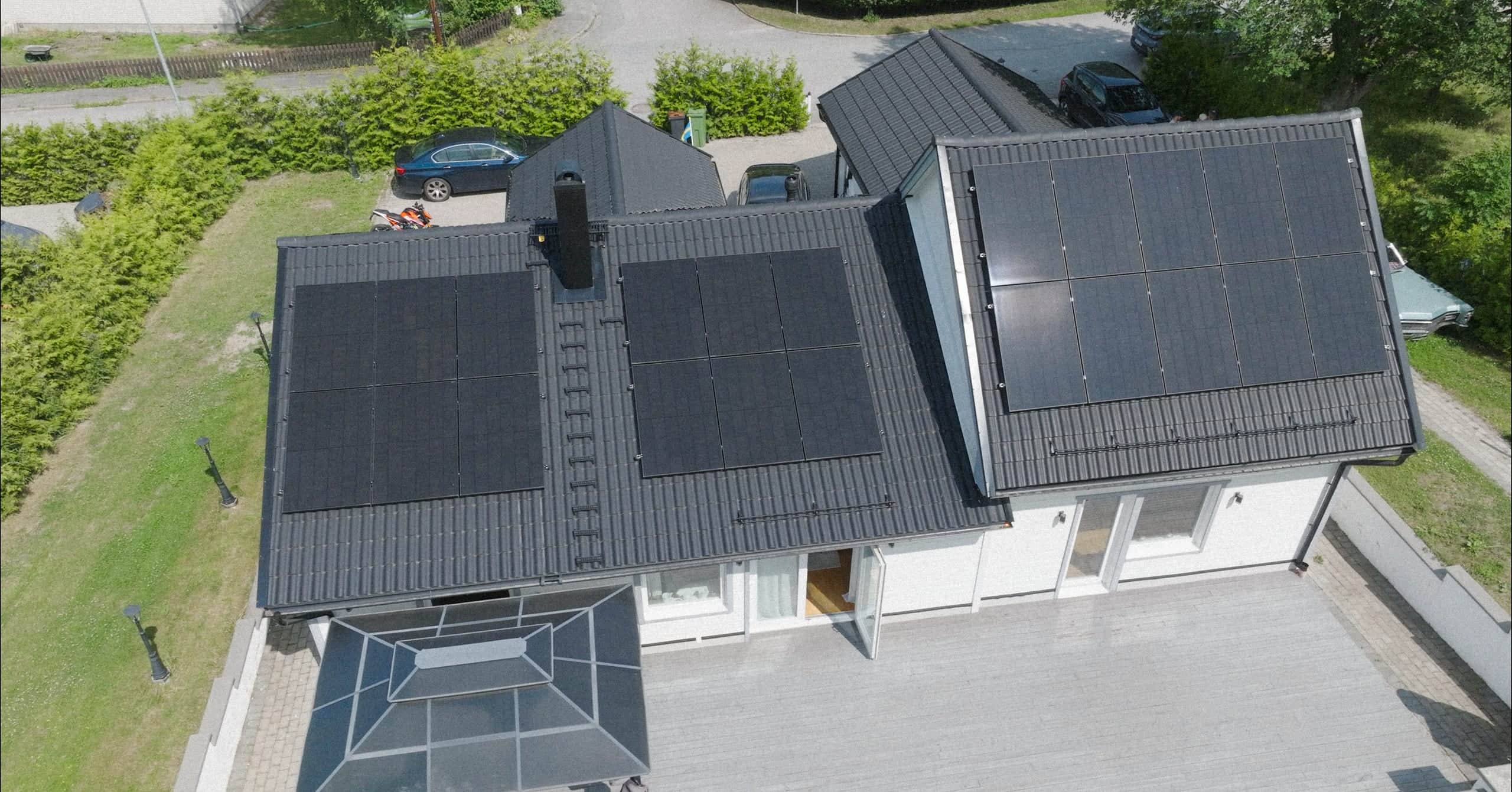
How many solar panels a house needs is really measured in kilowatts, that is the array's power, and depends on the roof, how much electricity you use and how much of it you use yourself. More panels make more electricity but cost more and sell the surplus off cheaply. Too few cover only a bit of your usage. The right number is house-specific.
A rule of thumb online gives you a count for an average house, not yours. The roof's size and direction, your usage and whether you have a battery and heat pump weigh more than the number of square metres. Below we cover what the size is measured in, what determines the count, what happens when it's too few or too many, and how you get the right number for your own house.
Are solar panels counted in panels or in kilowatts?
Both, but it's kilowatts that matter. Each panel has a rated power, and adding them up gives you the array's size in kilowatts. Two houses with the same number of panels can have arrays of different sizes if the panels are of different strengths, and it's the combined power that decides how much electricity the roof can make.
So the number of panels mostly tells you how much room the array takes on the roof. When someone asks how many panels they need, what they're really after is the power: how large an array fits the house's usage and roof. That's the figure the rest of the article is about.
What should the solar panels do?
Cover part of your electricity usage over the year, not every hour. Solar panels make the most in the middle of the day and the middle of summer, and the house's need often sits in the evening and in winter. The goal isn't for the panels to be enough at every moment, but for the yearly production to match a reasonable share of what you use.
What you want them to feed affects the count. If the panels only need to bring the bill down a little, a smaller array is enough. If they also have to fill a battery for the evening and run a heat pump that works through winter, more is needed. So the first question isn't how many panels, but how much of your usage they should cover.
What determines how many panels you need?
Four things weigh heaviest: how large your roof is and which way it faces, how much electricity you use, how much of it you use yourself instead of selling, and what you want to spend on the array. A large roof facing south holds a bigger array than a small one in shade. A house with a heat pump and an EV uses more electricity, and so has room for more panels to earn their keep.
The direction and the tilt decide how much each panel gives. Facing south gives the most over the year, east and west give somewhat less but more evenly across the day. Shade from trees or a chimney drags down production on the panels it covers. It's the interplay between roof, usage and how much you use yourself that gives the count, not any one of them alone.
What happens if there are too few panels?
Then the array covers only a small part of your usage, and the rest you buy from the grid as usual. On a sunny day there's never any big surplus, the battery rarely fills, and you notice less difference on the bill than you hoped. The roof would have held more, but you're not using it.
An under-sized roof is rarely the expensive mistake, but it's a missed chance. Once you've paid for scaffolding, mounting and an electrician, the added cost of a few more panels is small next to what they do over the years. Laying too few can work out dearer per kilowatt-hour than laying about right.
What happens if there are too many panels?
Then the array makes more electricity than the house can use, and the surplus is sold off to the grid at a lower price than you pay to buy it back. Electricity you use yourself is worth more than electricity you sell, so as your self-use share drops, the value of each extra panel falls. Past a point you're paying for panels whose electricity mostly leaves the house.
A battery moves that point upward, because it saves the day's surplus for the evening instead of selling it. But only so far: a battery can't store summer's surplus for winter. So bigger isn't automatically better, and the roof, the budget and how much electricity you actually use set an upper limit on how many panels earn their keep.
How many panels does my house need?
It falls out of an analysis of the house, not a rule of thumb. The right number shows once you know the roof's size, direction and tilt, how much electricity you use and when, whether you have a battery and heat pump, and how much of the electricity you use yourself. Those things aren't in a general recommendation, they're on your roof and in your usage.
With Elvy you don't have to guess. The solar panels are sized from your energy analysis and put together with the battery and heat pump as one whole, and Elvy owns and runs it. If the conditions change, it's our job to sort out, not yours. You skip both the arithmetic and the risk of laying too few or too many.
Keep reading More to explore
- Solar
Buy solar panels or take out an energy subscription?
Buy solar panels to own the system and take the upside, plus the wear and risk. If you just want a predictable bill, an energy subscription fits.
- Solar
Do solar panels work in winter in Sweden?
Yes, solar panels work in winter, but make much less electricity. The cold isn't the problem, it's the daylight. Solar is judged over the year, not December.
- Solar
How much can you save with solar panels in 2026?
How much you save with solar and a battery depends more on self-consumption and control than on the number of panels. We spell out the factors that decide it.
0+
Homeowners no longer manage their own power and heat. They decided they had better things to do.
Curious to do the same?