How long does a heat pump last, and what happens then?
A heat pump normally lasts 15 to 20 years. What wears: the compressor, inverter and fan. Service buys time. Own the pump and the replacement is on you.
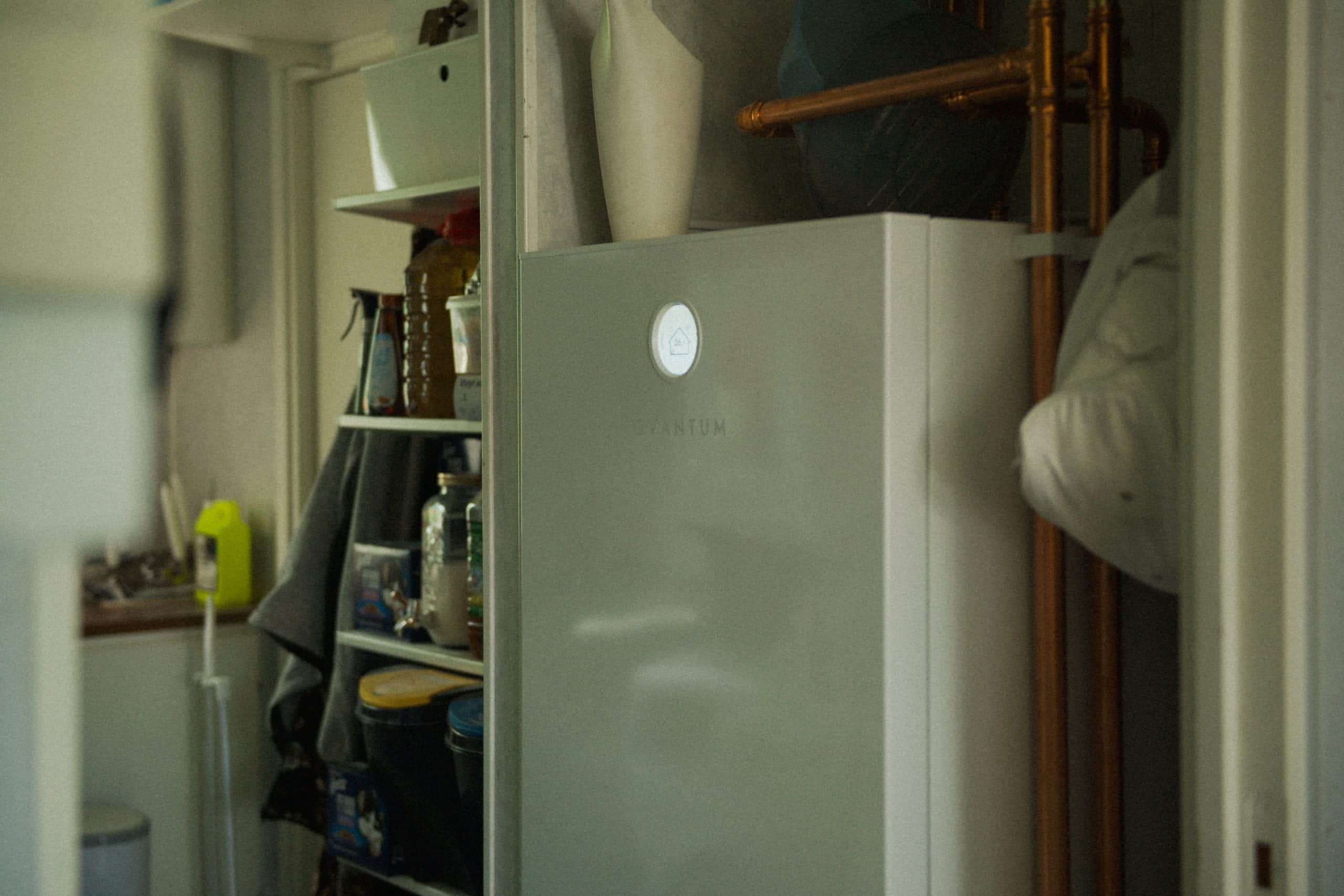
A heat pump normally lasts around 15 to 20 years, sometimes longer if it's looked after. What wears is the compressor, the inverter and the fan, while service and the right control stretch the time out. When it's finally worn out it gets replaced, and if you own it yourself, the replacement is on you.
So a lifespan isn't a date but a point where the next repair costs more than a new pump. Below we cover how long a pump actually lasts, what it is that wears out, what you can do to stretch the time, what happens when it's worn out, and how it looks when the pump is Elvy's.
How long does a heat pump last?
Usually around 15 to 20 years. It's a rule of thumb that holds up surprisingly well: a pump that was installed properly and serviced at regular intervals tends to last about that long before it's no longer worth repairing. Some last longer, some give up earlier, but fifteen to twenty years is a reasonable thing to plan around.
The lifespan isn't a clock that rings on a set date. The pump rarely stops working overnight. It loses efficiency slowly, the faults start coming closer together, and at some point it passes the point where a new pump costs less than the next repair. It's that point, not a year, that decides how long yours lasts.
What is it that wears out?
The parts that move and the parts that work hard. The compressor is the pump's heart and the one that wears most, because it starts and stops thousands of times a year. The inverter, the electronics that control the speed, wears out faster than the rest and usually needs replacing at some point in the pump's life. Fans and sensors are cheaper parts that can fail, but rarely the whole pump's death.
The refrigerant, the fluid that carries the heat, shouldn't be used up but can leak slowly and then needs topping up. Most of this is normal wear, not breakdowns. A pump that's sized correctly for the house doesn't have to strain as hard, and a pump that isn't straining lasts longer.
Can you extend the lifespan?
Yes, and it's less about luck than about upkeep. An annual service visit, a filter change and a check of the refrigerant catch small faults before they have time to turn expensive. A dirty pump made to work harder than it needs to wears faster, like anything else that's neglected.
How the pump is controlled matters too. A pump allowed to work steadily wears less than one constantly forced to run flat out. The right sizing from the start and sensible operation afterwards is what separates a pump that lasts fifteen years from one that lasts twenty. The cheapest thing you can do for the lifespan is exactly the service that's easiest to put off.
What happens when it's worn out?
Then it's time to replace it, and it's rarely an urgent night so much as a gradual realisation. The repairs come closer together, the efficiency is gone, and you notice it most on the electricity bill before the pump actually gives out completely. At that point the next repair is mostly money in a pump on its way out.
Replacing a pump is roughly the same job as installing the first one: a new unit, a new installation and a new investment. Own the pump and you're the one covering that whole cost, the day it comes. The old pump is taken care of and the refrigerant recycled, because it can't just be released. Then the fifteen to twenty years start over again.
What happens then with Elvy?
With Elvy the replacement isn't your problem. The pump is ours, and when it's finally worn out we're the ones who replace it, without your monthly cost jumping. You don't notice the end of the lifespan as an unexpected bill, you barely notice it at all.
You pay a fixed amount a month and have a warm house, year after year. The service, the repairs and finally the replacement itself are already in that amount. That amount comes from an energy analysis of your house and stays fixed for 15 years, adjusted once a year by the consumer price index. It does not follow the spot price. The question of what happens then is simply one you've handed to someone else.
Keep reading More to explore
- Heat pump
What does a heat pump really cost? The 15-year total
The purchase price is the smallest part. Over 15 years the cost is installation, service, repairs and above all electricity. It's the biggest, worst at the end.
- Heat pump
What are COP and SCOP? How to read a heat pump's spec
COP and SCOP measure a heat pump's efficiency. COP is heat per unit of power now, COP 3 gives three parts heat per part power. SCOP is the season average.
- Heat pump
What does a new heat pump cost per month?
A new heat pump rarely costs what you think. Often more than you budgeted for. Here we break down the real monthly cost, whatever way you finance the switch.
0+
Homeowners no longer manage their own power and heat. They decided they had better things to do.
Curious to do the same?