How a home battery earns money on the grid
A home battery earns money three ways: moving electricity in time, shaving peaks and renting its speed to Svenska kraftnät as grid support services.
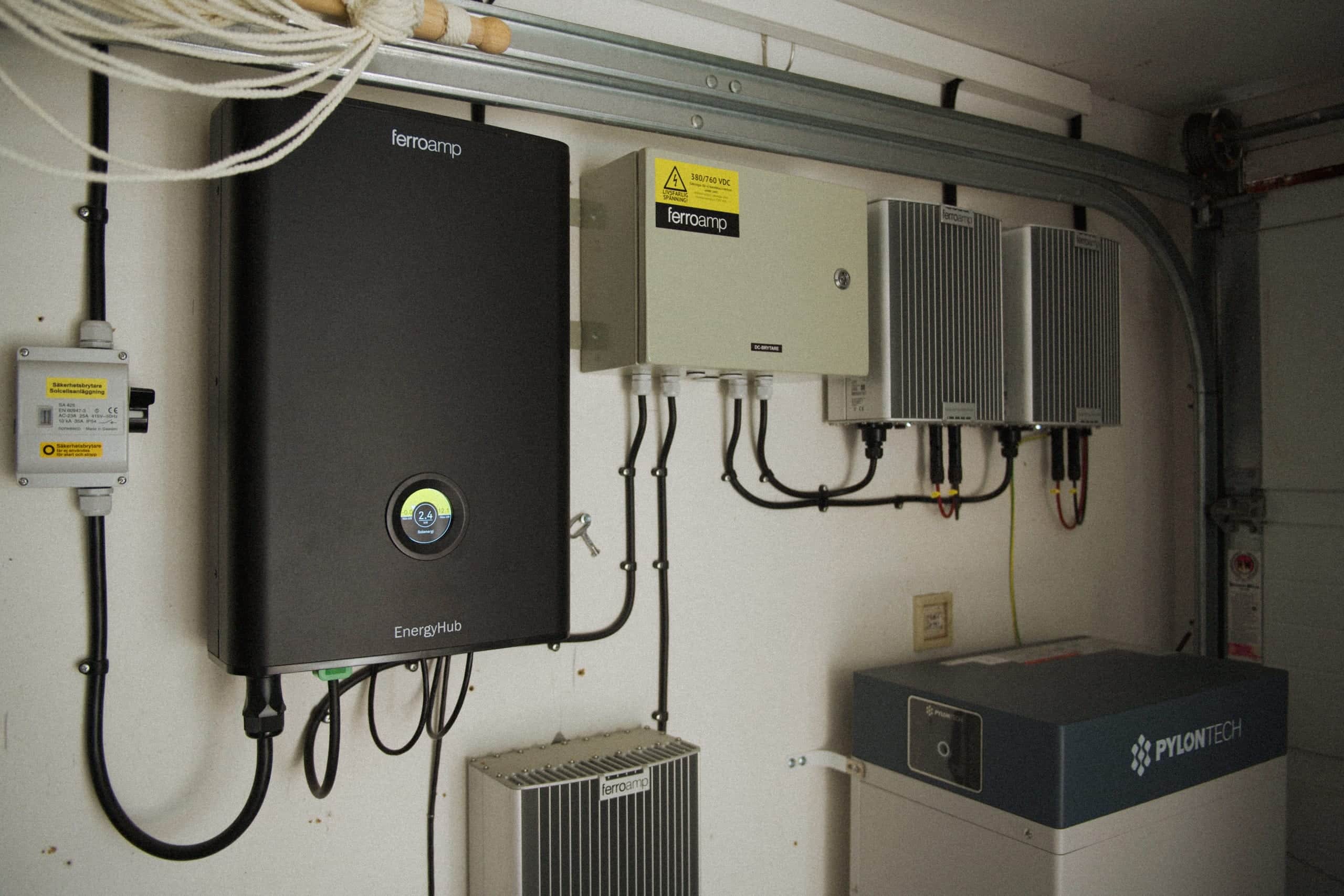
A home battery earns money in three ways. It moves electricity from cheap hours to expensive ones, it shaves the house's power peaks, and it rents out its speed to Svenska kraftnät, which pays to keep the grid's frequency stable. That last part is called support services, and it's the one most people have never heard of.
How does a battery earn money by moving electricity in time?
The easy part first. The electricity price changes hour by hour, and a battery can charge when it's cheap and use the power when it's expensive. The difference between those hours is money the battery earns just by waiting. If the difference is small on a given day, there's little to gain. If it's large, it quickly becomes worth the trouble.
This is the part people tend to understand, because it works the way we think about most other things. Buy cheap, use it when it's dear. But it's also the part with the least drama, and far from the whole story.
What are support services, and why does Svenska kraftnät pay for them?
The grid has to hold exactly 50 hertz at all times. The moment more electricity is fed in than is used, or the other way round, the frequency starts to drift, and if it drifts too far things trip out. To keep it steady, Svenska kraftnät buys what are called support services: equipment that on command can push in or pull out electricity in an instant.
It used to be large power plants that did this. The problem is that a power plant is slow. A battery isn't. It can respond almost instantly, and that's why batteries have become sought after in that particular market. Svenska kraftnät pays for the speed, not for the amount of electricity.
What does FCR have to do with my home battery?
FCR is the name for the fastest of these services, the frequency containment reserve. It's the one meant to catch small swings in the frequency second by second, and that's exactly what a battery is built for. It's sitting on the wall doing nothing most of the day anyway, so it may as well stand ready.
Your single battery is of course too small for anyone at Svenska kraftnät to care about on its own. The point is that it doesn't have to be on its own.
Can an ordinary household really take part in the grid's markets?
Not on its own. The markets for support services are built for players who can deliver a certain amount of power, and a home battery is too small to get in through that door by itself. It also takes someone to place the bids, keep track of the rules and respond when the grid calls.
Instead, many small batteries are pooled into one big one. Someone gathers hundreds of homes into a single resource that behaves like a power plant to the outside world, while each battery does its small part at home in the garage. It's that pooling that lets your wall suddenly earn money on a market it would never have got into alone.
What does it take to work in practice?
Three things, and none of them is your job. The battery needs an inverter fast enough to react, it needs to be connected so it can be controlled, and it needs someone trading on the markets for it around the clock. Miss one of the parts and the income falls away.
That's also why it isn't enough to buy a battery and hope. A battery that just sits and stores solar power uses a fraction of what it can. The rest requires someone to actively put it to work, all the time, without you noticing anything.
How do I get a share of that money with Elvy?
You get a share of it without doing anything, because that's the whole idea. Elvy owns the battery, connects it and trades its capacity against the spot price, against the power peaks and on the support services. The income it brings in is counted into what you pay, so it shows up as a calm monthly fee rather than a chase you have to keep going yourself.
You could have done all of that yourself. It would just take a battery, the right inverter, a contract with an aggregator and a fair share of your attention. Or you let the wall in the garage earn its money quietly, and spend your time on something more fun.
Keep reading More to explore
- Battery
What does a home battery cost, and is it worth it?
What a home battery costs depends on the house. The honest figure doesn't exist until someone runs your numbers. Bought outright, payback is uncertain.
- Battery
How big a home battery do I need?
The right size for a home battery is measured in kilowatt-hours and depends on what you want it to do. Bigger isn't always better; it comes from an analysis.
- Battery
How does a home battery shave the power fee?
A power fee charges for your highest power peak. A home battery shaves that peak by covering part of the load in the moment, so less is drawn from the grid.
0+
Homeowners no longer manage their own power and heat. They decided they had better things to do.
Curious to do the same?