How long does a home battery last?
A home battery wears from use, not age. Life is measured in cycles, not years. Own it and you carry the wear yourself. With Elvy, replacement is our job.
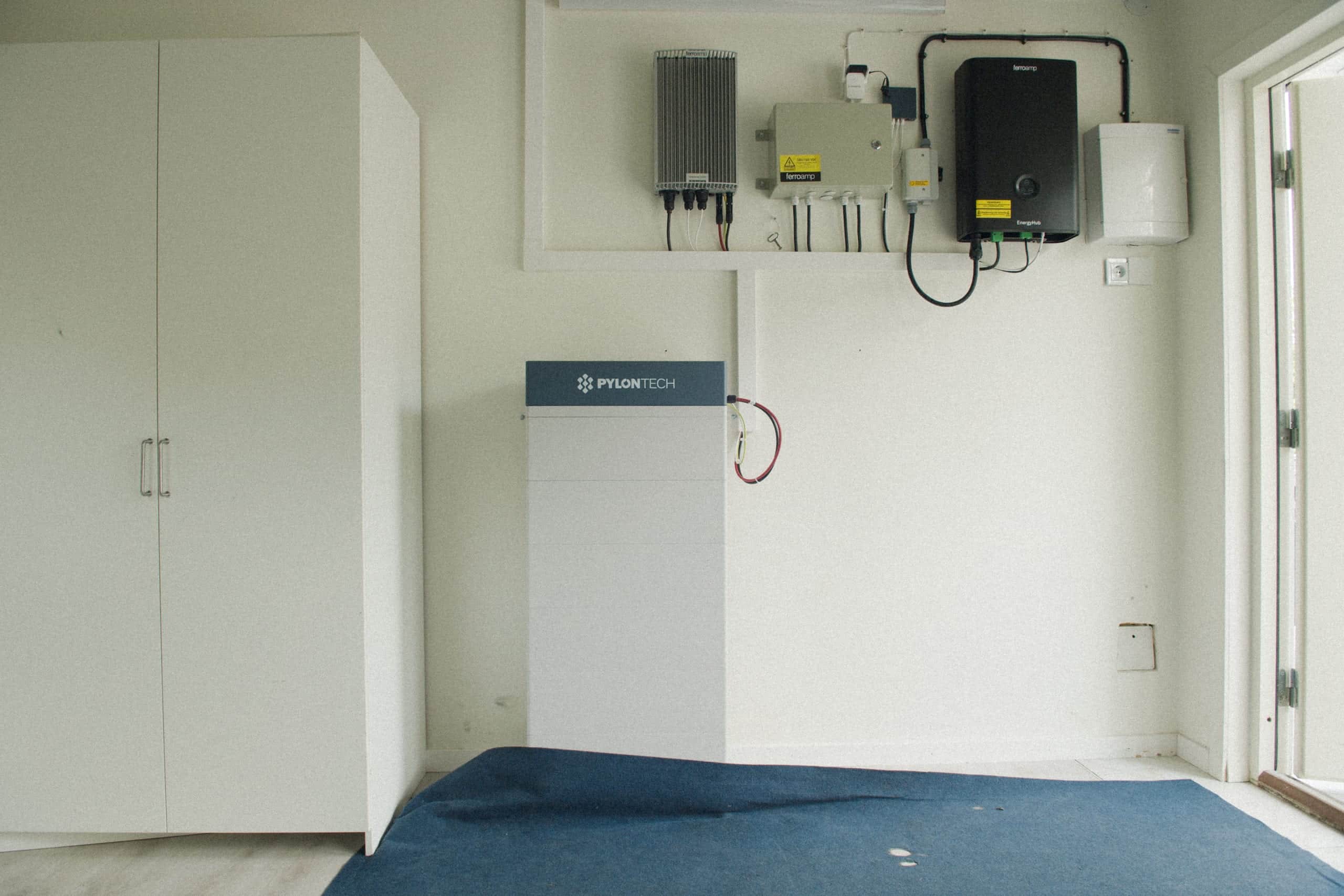
A home battery wears from use, not from age. Its life is measured in cycles, that is, how many times it can be charged and discharged before it loses capacity, not in years. If you own the battery, you carry that risk yourself. In an Elvy subscription we own the equipment and replace it when it needs replacing.
What does it mean that life is measured in cycles?
A cycle is one full charge and discharge. Fill the battery and empty it again and you've used one cycle, a bit like laps on a meter. That's the number that counts, not how many years the battery has hung on the wall. A battery that works hard every day racks up cycles faster than one that's rarely used.
So the age on its own says fairly little. Two identical batteries can be worn to different degrees depending on how much they've had to work. It's the use that counts, and that's why the question of how long a battery lasts has no answer in years.
What wears a home battery?
Above all how hard and how often it's used. Emptying the battery completely every time wears it more than running it gently. Heat wears it too, as does charging and discharging at a high pace. A battery that gets to work calmly and sit cool lasts longer than one that's pushed.
This is where the control makes a difference. A battery optimised with sense is charged and emptied in a way that spares it over time, not only in a way that earns the most today. How a battery is looked after decides how many of its cycles it actually manages to deliver.
Does the battery die when the cycles run out?
No, it doesn't switch off all at once. A battery loses capacity gradually. Over time it holds a little less than when it was new, a bit like an old phone battery that doesn't last as long on a charge. It doesn't stop working, it just gets smaller with the years.
The point is that the wear creeps in rather than striking. A battery that's meant to pay for itself over many years also has to keep its capacity up in those years, or the gain is eaten up by replacing it early. So the question isn't whether it runs out on a given day, but how much it loses along the way.
How does your use affect the lifespan?
A battery in a house with solar panels and a heat pump works differently from one that only moves electricity between cheap and expensive hours. More jobs can mean more cycles, but also cycles that are worth more. It's the whole of the house that decides how hard the battery has to run, not the battery on its own.
That's the very reason to do the sums on the house rather than on the product. The same battery can wear fast in one household and gently in another, depending on what it's used for. How long it lasts is tied to how it's used, and you can't read that off a table in advance.
Who carries the risk if the battery wears out early?
If you own the battery yourself, it's you. If it wears out faster than you reckoned, the replacement is your cost, and it lands in the middle of the calculation that was supposed to pay off. It's a risk that's hard to see the shape of, because it depends on how much the battery has to work in the years ahead.
In a subscription it's Elvy's risk. We own the equipment, look after it and replace it when it needs replacing. If a battery lasts a shorter time than expected, that's ours to sort out, not an unexpected line on your bill.
What does it look like with Elvy?
The battery is ours, and ideally you should never have to think about it. Elvy owns it, installs it, runs it and steers it against the spot price and the power peaks in the background. Wear, service and replacement sit with us, not with you, and you pay a known amount each month.
How long your particular battery lasts is still a real question, but we're the ones who work it out and carry it. The most boring thing about the battery should be that you forget it's there.
Keep reading More to explore
- Battery
What does a home battery cost, and is it worth it?
What a home battery costs depends on the house. The honest figure doesn't exist until someone runs your numbers. Bought outright, payback is uncertain.
- Battery
How big a home battery do I need?
The right size for a home battery is measured in kilowatt-hours and depends on what you want it to do. Bigger isn't always better; it comes from an analysis.
- Battery
How does a home battery shave the power fee?
A power fee charges for your highest power peak. A home battery shaves that peak by covering part of the load in the moment, so less is drawn from the grid.
0+
Homeowners no longer manage their own power and heat. They decided they had better things to do.
Curious to do the same?